

Reception: +91-830 290 2727
Office: +91-830 290 2727
E-mail: kaladwaslalhaveli@gmail.com
Address: 96, Chawra House Ganesh Ghati Udaipur, Rajasthan 313001
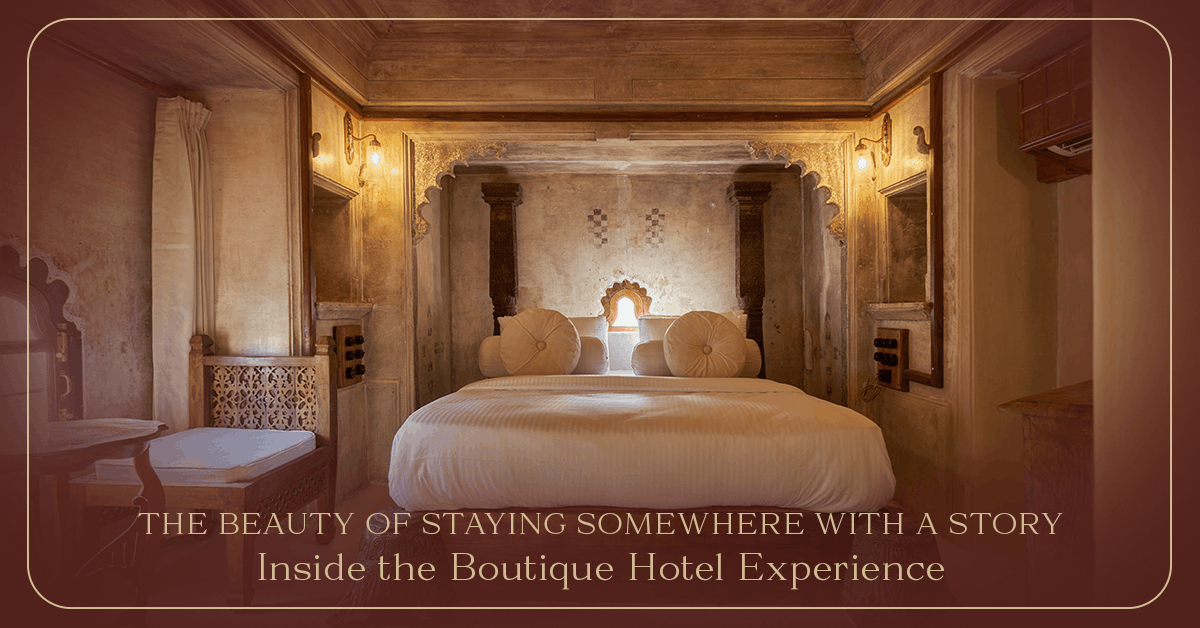
The Beauty of Staying Somewhere With a Story: Inside the Boutique Hotel Experience
There is a difference between having somewhere to sleep in a new city and having somewhere that becomes part of the reason you remember the journey.
A standard hotel can be comfortable, convenient and beautifully designed. But a historic property can give you something different: context. Its architecture may tell you something about the place you have travelled to. Its rooms may carry traces of an older way of living. Its location may put you closer to neighbourhoods, markets and streets that reveal everyday life beyond the usual sightseeing route.
That is the quiet appeal of a heritage boutique hotel in Udaipur.
For travellers who value character as much as comfort, where you stay can shape how you understand a destination. In a city like Udaipur, where Mewari history, traditional architecture and contemporary hospitality exist side by side, a boutique haveli can make the accommodation itself part of the travel story.
What Makes a Boutique Hotel With a Story Different?
A boutique hotel with a story is usually defined by a sense of identity rather than uniformity. Its architecture, interiors, location, history or approach to hospitality gives it a character that could not simply be reproduced in another destination.
The difference is especially noticeable in a heritage property. Instead of creating an entirely new environment, restoration works with what already exists. Historic materials, architectural details and the personality of the building become part of the guest experience.
That does not mean giving up modern comfort.
The best heritage stays find a considered balance between preservation and contemporary hospitality. At Kaladwas Lal Haveli, for example, a 300-year-old haveli has been restored as a boutique hotel while retaining its traditional character and incorporating modern comforts.
The result is accommodation that feels connected to its surroundings rather than separated from them.
When the Building Becomes Part of the Journey
Think about arriving in a new city. You spend the day looking at palaces, temples, old streets and museums, then return to a hotel that could belong to any modern city in the world.
There is nothing wrong with that. But something is missing.
A heritage stay changes the transition between exploring and resting. The architecture continues the conversation.
In a historic haveli, details such as carved elements, traditional interiors, restored surfaces and older architectural forms can provide another way of understanding regional design. At Kaladwas Lal Haveli, the restoration has focused on preserving the character of the original property while adapting it for present-day hospitality.
For a traveller interested in Rajasthan, this matters because architecture is not simply decoration. It is part of the region’s cultural vocabulary.
The building itself becomes another place to observe.
Seven Rooms, Seven Ways of Seeing Mewar
One of the most interesting aspects of a genuinely characterful boutique hotel is that the rooms do not necessarily feel interchangeable.
Kaladwas Lal Haveli has seven themed rooms, each designed around a different aspect of Rajasthan and Mewar. The current room collection includes Rakht Chandan, Pratikriti, Badal Mahal, Kalangi, Kesari, Junoo and Van Grahana.
The themes give each room its own identity.
Rakht Chandan draws inspiration from Mewar’s warrior heritage, while Pratikriti uses intricately carved mirrors as part of its design concept. Badal Mahal takes its cue from clouds and the monsoon, while Kalangi reflects the visual language of a Mewari wedding. Junoo is connected with the age and character of the haveli itself, and Van Grahana turns towards nature and tranquillity.
This is one of the pleasures of a boutique stay: choosing a room can become part of the experience rather than a simple decision based on bed size or floor area.
You are not only selecting where to sleep.
You are choosing which part of the property’s story you would like to inhabit for a few days.
Why Location Matters More in a Heritage Stay
A heritage hotel can tell you about the past, but its surroundings can tell you about the present.
This is why location becomes particularly important when choosing a haveli stay in Udaipur.
Kaladwas Lal Haveli is situated in Udaipur’s historic Old City, in the Ganesh Ghati area near Ghanta Ghar. Its location places guests close to landmarks and neighbourhood streets associated with the older character of the city, including Jagdish Temple, Gangaur Ghat and Lake Pichola.
The advantage is not simply proximity to attractions.
It is the opportunity to experience the texture of the neighbourhood between those attractions.
Walk a little, and the city becomes less like a collection of sightseeing points and more like a living place. Shops open for the day. Craftspeople work. Temple bells punctuate the streets. Food aromas drift through lanes. Local life continues regardless of whether someone has come to Udaipur for a weekend or for the first time.
A well-located boutique hotel gives you a base from which these moments become easier to notice.
Heritage Does Not Have to Mean Sacrificing Comfort
One misconception about historic accommodation is that choosing character means compromising on convenience.
That may have been true of some older forms of heritage accommodation, but a thoughtfully restored boutique hotel approaches the problem differently.
The objective is not to make guests feel as though they are living in a museum. It is to preserve the personality of the building while making it suitable for contemporary travellers.
At Kaladwas Lal Haveli, the restoration process included structural reinforcement and the careful preservation of original elements, with modern comfort incorporated into the restored haveli.
This distinction matters.
A heritage stay should allow you to appreciate the building without making you forget that you are there to relax.
That balance is part of what makes boutique hospitality compelling.
The Experience Continues Beyond the Room
A story-driven hotel does not stop being interesting once you leave your room.
The common spaces, dining areas, rooftop and surrounding neighbourhood can all contribute to the sense of place.
At Kaladwas Lal Haveli, the rooftop is positioned as a place from which guests can experience the surrounding Old City atmosphere, while the property also highlights dining, live performances and cultural experiences as part of its hospitality offering.
This creates a different rhythm to a city break.
Perhaps the morning begins with breakfast before heading into the Old City. The afternoon is spent exploring Udaipur. Later, instead of immediately leaving the property again, you return to the haveli and allow the day to slow down.
That pause is valuable.
Travel does not have to be a continuous sequence of attractions.
Sometimes the most memorable part is sitting somewhere that feels connected to the place you came to see.
Food Can Become Another Chapter of the Story
Food is one of the simplest ways to understand a region because it carries geography, climate, ingredients, memory and social traditions onto the plate.
For a heritage boutique hotel in Rajasthan, dining can therefore become an extension of the destination experience.
Rather than treating local cuisine as a decorative addition, travellers can look for properties that give regional food a meaningful place within the stay.
Kaladwas Lal Haveli highlights Mewari and Rajasthani culinary experiences alongside its wider heritage positioning.
For the traveller, this creates another opportunity to understand Udaipur through something more immediate than sightseeing.
You taste the destination.
And sometimes a meal remembered years later can bring back a place more vividly than a photograph.
What Should You Look For in a Story-Led Boutique Hotel?
Not every hotel calling itself “heritage” offers the same experience. When choosing one, look beyond the label.
Consider:
- Is the history of the property clearly explained? A credible heritage stay should be able to tell you what makes the building historically or culturally significant.
- Has the original character been retained? Look for evidence of restoration rather than simply traditional-looking decoration.
- Does each room have an identity? Individuality is one of the strongest advantages of boutique accommodation.
- Is the property connected to its neighbourhood? A central location can make it easier to experience the city beyond major monuments.
- Are modern comforts still considered? Heritage should enhance your stay, not make it unnecessarily difficult.
- Does the hotel understand the destination? Local food, cultural programming, architecture and thoughtful recommendations can make accommodation feel genuinely connected to place.
These questions help separate a hotel with a story from a hotel that has simply adopted heritage-inspired styling.
Why Kaladwas Lal Haveli Fits the Idea
The appeal of Kaladwas Lal Haveli lies in the relationship between the building, its location and the experience it aims to create.
Its identity begins with the haveli itself: a property presented as 300 years old and restored for contemporary boutique hospitality. Its seven themed rooms extend that story through different interpretations of Mewari and Rajasthani heritage. Its Old City setting places guests within a historic part of Udaipur rather than in an environment detached from it.
That combination makes the property relevant to travellers who want accommodation to contribute something to their destination experience.
You can spend the day discovering Udaipur, then return to a place whose own architecture and atmosphere continue the same conversation.
That is the real value of staying somewhere with a story.
A Stay You Remember for More Than the Bed
Years after a trip, travellers rarely remember every hotel specification.
They remember how a place felt.
They remember an old doorway they walked through every evening. The texture of a room that looked unlike anywhere they had stayed before. A rooftop conversation after a long day in the city. The sound of the streets below. The feeling of waking up inside a building that had existed long before their arrival.
This is where the idea of a heritage hotel experience becomes more than a marketing phrase.
A meaningful boutique stay adds another layer to travel. It gives you somewhere to pause, but also somewhere to look, listen and understand.
In Udaipur, where the past remains visible in architecture, neighbourhoods, crafts and everyday rhythms, staying in a historic haveli can make that connection especially tangible.
Kaladwas Lal Haveli offers one interpretation of this idea: a 300-year-old restored haveli where heritage character, themed accommodation and contemporary hospitality come together within the Old City.
The best accommodation does not compete with the destination.
It helps you see it differently.
FAQs
What is a heritage boutique hotel?
A heritage boutique hotel is a smaller, character-led property located in or adapted from a historic building. It combines distinctive architecture and cultural identity with contemporary hospitality, giving travellers a stronger sense of connection to the destination.
Why choose a heritage stay in Udaipur?
A heritage stay can make accommodation part of the destination experience. In Udaipur, staying within the historic Old City can place travellers closer to traditional architecture, neighbourhood streets, cultural landmarks and the everyday atmosphere of the city.
What makes Kaladwas Lal Haveli different from a standard hotel?
Kaladwas Lal Haveli is a restored 300-year-old haveli with seven themed rooms, each reflecting a different aspect of Mewari or Rajasthani heritage. The property combines its historic character with modern hospitality and is located in Udaipur’s Old City.
Does a heritage hotel offer modern comfort?
A well-restored heritage hotel can preserve historic character while adapting the building for contemporary guests. Kaladwas Lal Haveli describes its restoration as incorporating structural reinforcement and modern comfort while preserving original elements of the haveli.
Why is location important when choosing a boutique hotel in Udaipur?
Location influences how easily travellers can experience the city beyond their hotel. A property in the historic Old City can provide closer access to landmarks, traditional streets, local businesses and the cultural atmosphere that makes Udaipur distinctive.