

Reception: +91-830 290 2727
Office: +91-830 290 2727
E-mail: kaladwaslalhaveli@gmail.com
Address: 96, Chawra House Ganesh Ghati Udaipur, Rajasthan 313001
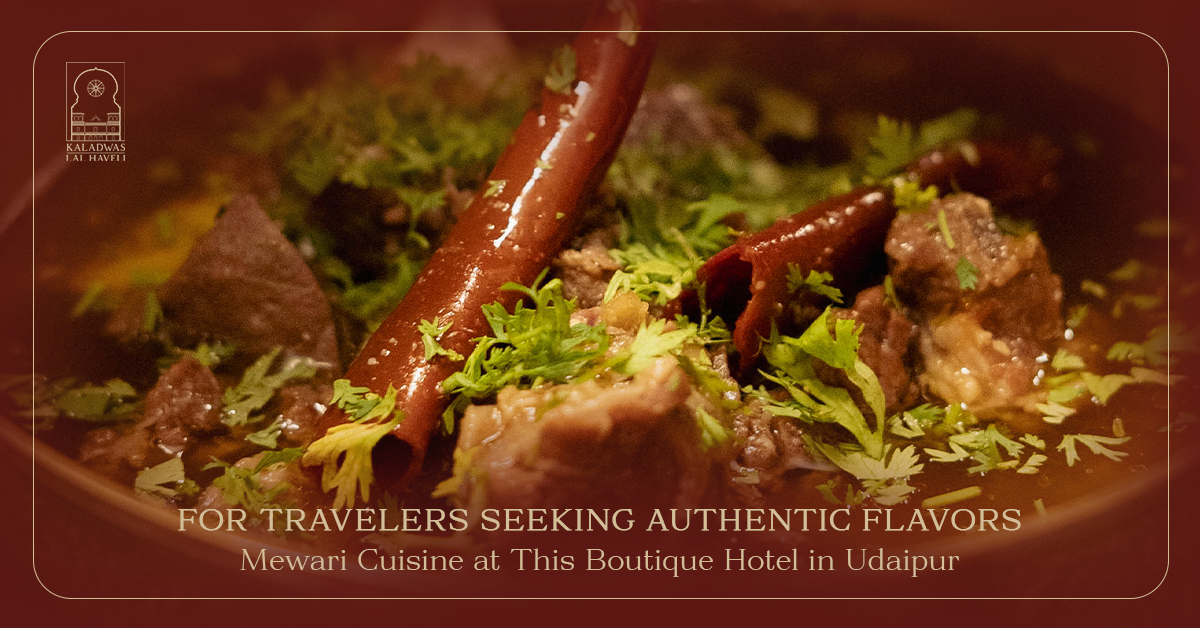
For Travelers Seeking Authentic Flavors: Mewari Cuisine at This Boutique Hotel in Udaipur
A city can be understood through its monuments, markets and streets, but sometimes its most revealing stories arrive at the dining table.
Food carries traces of the landscape that produced it. It reflects what grows locally, what seasons allow, how families cook, what communities preserve and how hospitality is expressed. For travellers visiting Udaipur, discovering Mewari cuisine can therefore be as meaningful as walking through a palace or exploring the Old City.
This is especially true when food becomes part of a heritage stay.
At a Boutique Hotel in Udaipur, the experience can extend beyond a comfortable room. The architecture, location, hospitality and local flavours can work together to create a stronger sense of place. At Kaladwas Lal Haveli, a restored 300-year-old haveli in Udaipur’s Old City, that connection is particularly relevant: the property presents traditional Mewari character alongside contemporary hospitality, with a rooftop restaurant and a stated focus on traditional Mewari cuisine.
What Is Mewari Cuisine?
Mewari cuisine is the regional food tradition associated with Mewar, the historic region of southern Rajasthan centred around Udaipur.
It forms part of the wider Rajasthani culinary landscape, but regional cooking traditions across Rajasthan are not completely identical. Climate, available ingredients, local customs and household traditions all influence what appears on the plate.
Traditional Rajasthan cooking has long made practical use of ingredients such as gram flour, millet, barley, corn, pulses and dairy. The state’s dry environment and limited availability of fresh green vegetables also encouraged cooking traditions built around ingredients that could be stored and used over longer periods.
That practical foundation does not make the cuisine plain. Mewari food can be deeply flavoured, with combinations of spices, ghee, lentils, grains, dried vegetables, dairy, chutneys and pickles creating dishes with considerable variety.
For a traveller unfamiliar with the region, the easiest way to understand Traditional Mewari Food is to think of it as cuisine shaped by place: resourceful, flavour-conscious and closely connected with Rajasthan’s food culture.
The Flavors of Mewar: Food Shaped by the Land
The landscape of Rajasthan has always influenced its cooking.
When fresh produce and water cannot be taken for granted, kitchens learn to make thoughtful use of what is available. Dried ingredients, pulses, gram flour, millet and dairy become important building blocks, while spices and preserved accompaniments add depth to meals.
Ghee is an important element in many traditional preparations. Bajra and other grains bring substance to breads and porridges. Lentils provide the basis for comforting dals, while gram flour becomes the foundation for preparations such as gatte.
Then there are the accompaniments: garlic chutney, pickles, papad and other sharp or spicy elements that can transform a relatively simple meal.
This contrast is part of what makes Mewar Cuisine interesting. A meal can move between earthy grains, creamy dairy, tangy preserved vegetables, warm spices and sweet preparations without losing its regional identity.
For visitors searching for the best food in Udaipur, understanding these ingredients can make tasting the cuisine more rewarding. Instead of asking only what a dish contains, you begin to notice why those ingredients became important in the first place.
Traditional Mewari Dishes Travelers Should Know
You do not need to try every dish in Rajasthan to appreciate its culinary traditions. A handful of preparations can provide an excellent introduction.
Dal Baati Churma
Perhaps the most recognisable dish associated with Rajasthan, Dal Baati Churma brings together three contrasting elements: lentils, baked wheat-based baati and sweet churma.
Rajasthan Tourism describes it as a complete and widely savoured Rajasthani meal, traditionally served with ghee and accompaniments such as garlic chutney.
For first-time visitors, it offers a useful introduction to the region’s fondness for combining savoury, rich and sweet elements within the same meal.
Gatte Ki Sabzi
Gatte are gram-flour dumplings cooked in a spiced gravy. They are a good example of how regional cooking can turn a relatively simple pantry ingredient into a substantial dish.
The use of gram flour is also consistent with the broader food traditions of Rajasthan, where gram flour has long been an important ingredient.
Ker Sangri
Ker Sangri is one of the most distinctive preparations associated with Rajasthan’s dry landscape.
It combines ker, a local shrub berry, with sangri, the bean of the khejri tree. Rajasthan Tourism describes the preparation as tangy and flavourful, traditionally cooked with spices including red chilli and carom seeds.
For travellers, this dish is particularly revealing because its ingredients immediately tell a story about the environment.
Bajra-Based Preparations
Pearl millet, or bajra, has an important place in Rajasthan’s food traditions. Its use in breads and other preparations reflects the wider importance of hardy grains in an arid region.
Trying a bajra-based preparation alongside vegetables, dal or dairy-based accompaniments can offer a different perspective on Traditional Rajasthan Food beyond the better-known dishes.
Papad-Based Curries, Kadhi and Accompaniments
Rajasthani cooking also demonstrates considerable creativity with everyday ingredients. Papad-based curries, kadhi, chutneys and pickles can add different textures and levels of acidity or spice to a meal.
These supporting dishes matter because regional food is rarely about one famous recipe. The character often emerges from the combination.
Why Local Food Belongs in a Heritage Stay
A meal tastes different when the setting gives it context.
Imagine eating a regional dish in an anonymous dining room. The food may still be excellent, but little around it explains where the flavours come from.
Now place that same experience within a historic haveli in Udaipur’s Old City, surrounded by traditional architecture and the rhythms of the neighbourhood. The relationship between food and place becomes much clearer.
That is one of the strengths of a Heritage Dining Experience.
At Kaladwas Lal Haveli, the property’s official website describes its rooftop restaurant as a place for guests to enjoy the surrounding Old City, while the hotel highlights traditional Mewari cuisine prepared with fresh local ingredients and age-old recipes. It also promotes rooftop dinners accompanied by live performances.
The value of such a setting is not simply visual. Architecture creates context. Hospitality creates a sense of welcome. Regional cuisine provides a taste of the culture.
Together, they make the meal part of the destination.
Mewari Cuisine at Kaladwas Lal Haveli
Kaladwas Lal Haveli’s food positioning fits naturally within the property’s wider heritage identity.
The hotel describes itself as a 300-year-old restored haveli-turned-boutique hotel in Udaipur’s Old City, offering Rajasthani charm and an authentic Mewari experience. Its current website specifically highlights Mewari Cuisine, describing traditional preparations made with fresh local ingredients, alongside cultural experiences and rooftop dining with live performances.
The property also has a Rooftop Restaurant, while its amenities include Purana Shahar Cafe and room-service meals.
For travellers, this means there is a natural opportunity to connect the food experience with the character of the haveli itself.
A rooftop dinner overlooking the historic city can provide a different perspective from eating in a conventional restaurant. The setting becomes part of the evening, while regional dishes provide the culinary connection to Rajasthan.
The emphasis should not be on treating Mewari food as a themed attraction. Its value comes from allowing guests to encounter a regional tradition within a property whose own identity is rooted in Mewar and Udaipur.
Why the Setting Changes the Experience
There is a difference between eating local food and understanding local food.
The second requires context.
A heritage property can provide some of that context naturally. Traditional architecture places the meal within a recognisable cultural landscape. A conversation with knowledgeable hospitality staff can explain a dish or ingredient. A rooftop can connect dinner with the Old City’s changing light and sounds. Local recommendations can encourage guests to explore markets and food traditions beyond the hotel.
Kaladwas Lal Haveli’s location makes this connection particularly practical. The property sits in the Old City near landmarks including Lake Pichola, City Palace, Jagdish Temple and Gangaur Ghat, placing guests close to the historic and everyday life of Udaipur.
Food can therefore become one part of a much wider cultural experience.
A morning walk through the Old City. A visit to a temple or palace. A glimpse of local craft workshops. An evening meal featuring regional flavours. The experiences reinforce one another.
Why Choose a Heritage Stay for a Local Food Experience?
A Heritage Stay in Udaipur offers something that a generic accommodation may not: proximity to the cultural context surrounding the destination.
For travellers interested in food, this can mean:
- Local connection: A heritage property can make it easier to engage with regional traditions and recommendations.
- Sense of place: Historic architecture provides context for the cuisine being served.
- Personalised hospitality: Smaller boutique properties can create more opportunities for conversation and guidance.
- Cultural continuity: Food, architecture, music and local customs can be experienced together.
- Convenience: Guests can enjoy regional dishes without leaving the heritage environment after a day of sightseeing.
This is one reason a Haveli Stay in Udaipur can appeal to travellers who want their accommodation to be part of the destination rather than simply a base for visiting it.
Kaladwas Lal Haveli’s own heritage positioning brings architecture, Mewari identity, hospitality and culinary experiences into the same setting.
How to Recognise a Meaningful Mewari Food Experience
The word “authentic” is used frequently in travel marketing, but travellers can look for practical indicators instead of relying on the label alone.
A meaningful Mewari Food experience may involve:
Regional ingredients: Look for foods and preparations connected with Rajasthan rather than dishes that could belong to any part of India.
Traditional preparations: Ask whether dishes follow established regional cooking methods or have been heavily adapted for a generic restaurant menu.
Seasonality: Traditional cooking often changes with what ingredients are available during different times of year.
Cultural context: A good hospitality team should be able to explain what a dish is, what its principal ingredients are and how it fits into regional food traditions.
The complete meal: Pay attention to breads, dals, vegetables, chutneys, pickles and sweets rather than focusing only on a famous main dish.
A sense of place: Dining in an environment connected to local architecture and culture can make the experience more memorable.
None of these factors alone guarantees authenticity. But together, they encourage travellers to approach local cuisine with curiosity rather than treating it as a checklist.
Food as Part of the Udaipur Experience
Udaipur is often introduced through its lakes and palaces. Those landmarks deserve their place in every itinerary, but they represent only one layer of the city.
The Old City reveals another. Its streets, markets, temples, craftsmen, homes and havelis show how heritage continues within everyday life. Kaladwas Lal Haveli’s own Old City walking guide emphasises this living quality, including traditional shops, artisans, historic architecture and local markets.
Cuisine belongs in that same picture.
A dish of Ker Sangri can reveal something about Rajasthan’s landscape. Bajra can point towards the importance of resilient local grains. Gatte demonstrate the versatility of gram flour. Dal Baati Churma shows how different textures and flavours can become one recognisable regional meal.
These details transform Food in Udaipur from another sightseeing activity into a way of understanding the destination.
Taste Udaipur, Don’t Just Visit It
Travel memories are rarely made from photographs alone.
They are also made from the first taste of an unfamiliar dish, the aroma of spices drifting across a rooftop, a conversation about an ingredient, or a meal shared after hours spent walking through an old city.
That is why Mewari cuisine deserves a place in the Udaipur itinerary.
For travellers choosing a Luxury Stay in Udaipur, the accommodation can become part of that discovery. At Kaladwas Lal Haveli, a 300-year-old heritage setting, Old City location, rooftop restaurant and stated focus on traditional Mewari cuisine bring several elements of the destination together in one experience.
The result is not simply a meal during a holiday.
It is a chance to understand a region through the ingredients it uses, the flavours it preserves and the hospitality with which those flavours are shared.
Because sometimes the most lasting way to remember Udaipur is not to look at another photograph of the City Palace.
It is to remember what Udaipur tasted like.
FAQs
What is Mewari cuisine?
Mewari cuisine is the regional food tradition associated with the Mewar region of southern Rajasthan, particularly Udaipur. It forms part of the broader Rajasthani culinary tradition and makes use of ingredients such as pulses, gram flour, grains, dairy, spices and regionally available vegetables and dried ingredients.
What traditional Mewari food should travellers try in Udaipur?
Good introductions include Dal Baati Churma, Gatte Ki Sabzi, Ker Sangri, bajra-based preparations, kadhi, papad-based curries and regional chutneys or pickles. The exact dishes available can vary by restaurant and season.
What food is Udaipur famous for?
Udaipur is known for regional Rajasthani and Mewari preparations including Dal Baati Churma, Gatte Ki Sabzi and Ker Sangri, along with a wider selection of traditional breads, snacks, sweets and accompaniments.
Can guests experience Mewari cuisine at Kaladwas Lal Haveli?
Yes. Kaladwas Lal Haveli’s official website highlights traditional Mewari cuisine prepared with fresh local ingredients, along with a rooftop restaurant and rooftop dining experiences.
Why is food important during a heritage stay?
Regional cuisine adds another layer to the experience of staying in a historic property. Alongside architecture and hospitality, local food can help travellers understand the ingredients, traditions and cultural influences of the destination.