

Reception: +91-830 290 2727
Office: +91-830 290 2727
E-mail: kaladwaslalhaveli@gmail.com
Address: 96, Chawra House Ganesh Ghati Udaipur, Rajasthan 313001
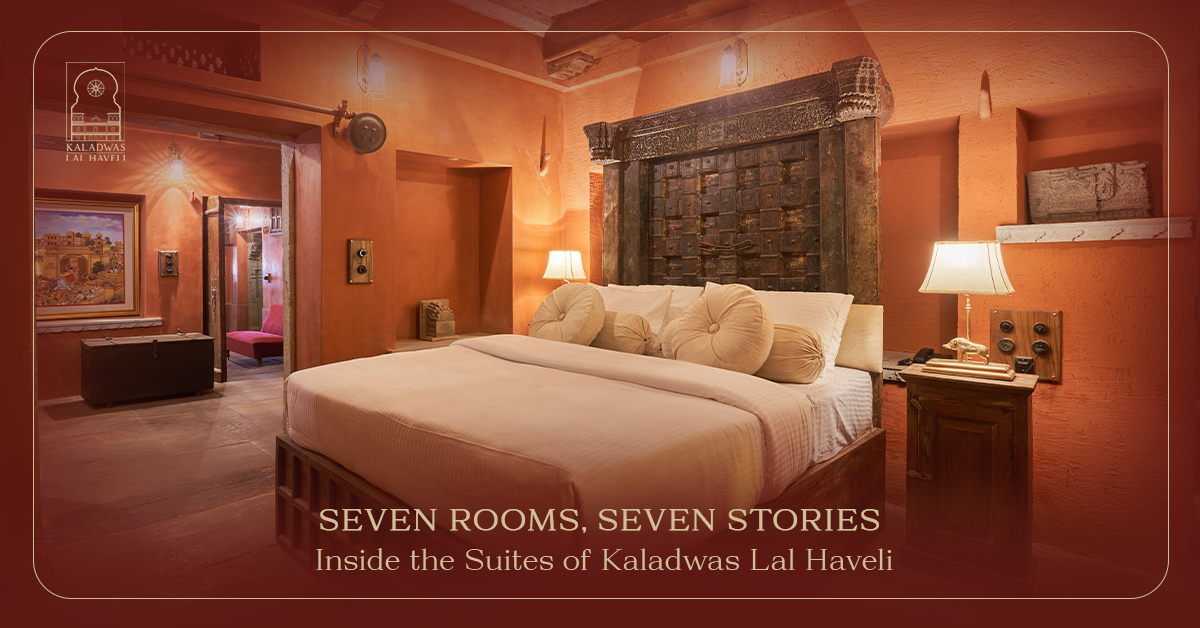
Seven Rooms, Seven Stories: Inside the Suites of Kaladwas Lal Haveli
A hotel room can be beautiful without saying much about the place around it. In many large hotels, rooms are deliberately designed to look alike: the same layout, the same furniture, the same visual language. It makes the experience predictable and efficient.
A heritage haveli works differently.
Here, individuality is part of the architecture. The walls, materials, colours, furnishings and stories can give one room a character distinctly different from another. At Kaladwas Lal Haveli, seven themed rooms bring this idea to life, each drawing from a different facet of Rajasthan and Mewar while remaining part of the same 300-year-old heritage property.
That is what makes choosing a room here more interesting than simply selecting a category. You are choosing a particular way to experience the atmosphere of an old Udaipur haveli.
A 300-Year-Old Haveli, Reimagined for Modern Travellers
Located in Udaipur’s Old City, Kaladwas Lal Haveli is a restored 300-year-old haveli transformed into an intimate boutique hotel. Its identity comes from the meeting of two worlds: the architectural character of historic Mewar and the expectations of a contemporary traveller.
The property retains its heritage character while introducing modern conveniences into the guest experience. The hotel’s own description highlights traditional Rajasthani craftsmanship, restored architectural elements and contemporary comforts across its rooms.
This balance matters.
A genuine Heritage Stay in Udaipur should not feel like a museum where guests are merely observing history from a distance. It should allow them to inhabit that history comfortably. At Kaladwas Lal Haveli, heritage is experienced through the design of the rooms, the atmosphere of the haveli and the relationship between the property and the historic streets outside.
Why Seven Rooms Matter in a Boutique Hotel
The appeal of a Boutique Hotel in Udaipur often lies in its scale.
A smaller property can give greater attention to individuality. Instead of designing hundreds of rooms around one template, Kaladwas Lal Haveli has created seven themed spaces, each connected to a different idea drawn from Mewar, Rajasthan, nature or traditional life.
The seven rooms are:
- Rakht Chandan – a room inspired by the regal heritage and valiant warriors of Mewar.
- Pratikriti – a room shaped around carved mirrors and the idea of self-reflection.
- Badal Mahal – inspired by the skies, clouds and celestial character associated with Mewar.
- Kalangi – influenced by the grandeur and traditions of a Mewari wedding.
- Kesari – connected with the festive spirit, resilience and strength associated with the women of Mewar.
- Junoo – a room where restored royal imprints, carved walls and artefacts evoke the passage of three centuries.
- Van Grahana – a quieter theme inspired by nature and the feeling of retreating from the city’s movement.
Importantly, these are not seven variations of the same room. They form a collection of themes within one heritage setting.
The property currently categorises Rakht Chandan, Pratikriti and Kesari as Suite Rooms, Badal Mahal and Kalangi as Super Deluxe rooms, and Junoo and Van Grahana as Deluxe Rooms. Together, they form the hotel’s seven themed-room experience.
Seven Themes, One Heritage Story
The most compelling aspect of the rooms is not their classification. It is the thought behind their identities.
Rakht Chandan draws from the valour and regal traditions of Mewar. Pratikriti, with its carved mirrors, takes a more introspective direction. Badal Mahal turns towards the skies and monsoon atmosphere, while Kalangi evokes the ceremonial richness of Mewari weddings. Kesari carries a connection with Rajasthan’s festive traditions and the strength of Mewar’s women.
Then there are Junoo and Van Grahana, which move the storytelling in different directions. Junoo focuses on the sense of age preserved through royal imprints, carved walls and artefacts. Van Grahana takes its inspiration from nature and quietness.
Together, these themes demonstrate something important about a heritage hotel: storytelling does not always require a plaque explaining the past. It can exist in the visual language of a room.
Where Traditional Craftsmanship Becomes Part of the Stay
A heritage property is ultimately defined by what it preserves.
At Kaladwas Lal Haveli, traditional Rajasthani craftsmanship forms an important part of that identity. The property’s heritage architecture incorporates details such as carved jharokhas, wooden ceilings, hand-painted walls and antique décor, while restored textures and inherited furnishings help retain a sense of continuity with the building’s past.
This is where the idea of a Heritage Boutique Hotel in Udaipur becomes more meaningful.
The appeal is not simply having old-looking furniture or adding traditional patterns to a contemporary room. The stronger experience comes when craftsmanship, architecture and design collectively create a sense of place.
For travellers interested in Mewari Architecture, traditional craftsmanship or Rajasthan’s visual heritage, the room itself becomes part of the cultural experience.
Heritage Character Without Giving Up Comfort
Historic architecture has an atmosphere that new construction can struggle to reproduce. But travellers today still expect the practical comforts of a contemporary hotel.
Kaladwas Lal Haveli brings those expectations into its heritage setting. The property states that its rooms include modern amenities, luxurious bedding, high-speed Wi-Fi, and climate control.
This creates an important balance:
Historic character on one side, contemporary convenience on the other.
That balance is central to a successful Luxury Heritage Hotel experience. Guests can appreciate traditional interiors and the atmosphere of a Rajasthani Haveli without giving up the comfort needed after a day spent exploring Udaipur.
Heritage does not need to mean inconvenience.
The Room Becomes Part of Your Udaipur Story
The best accommodation does not exist separately from its destination.
A traveller staying in a standardised modern hotel might explore Udaipur during the day and return to a room that could belong to almost any city. A Haveli Stay in Udaipur creates a different relationship between the destination and the place where you sleep.
At Kaladwas Lal Haveli, the seven room themes provide an introduction to different aspects of Rajasthan before you even leave the property.
You might begin the day surrounded by a room inspired by Mewar’s traditions, spend the afternoon walking through the Old City, visit historic landmarks, return through the lanes of Ganesh Ghati, and later watch the city change colour from the rooftop.
The accommodation becomes part of the itinerary rather than simply a stop between activities.
Beyond the Seven Rooms: Staying in the Old City
The setting strengthens that experience.
Kaladwas Lal Haveli is located in Udaipur’s Old City, within walking distance of several major landmarks. The property’s website lists Jagdish Temple, Gangaur Ghat, City Palace and the Clock Tower Market among nearby attractions.
This matters because a Heritage Accommodation experience is not limited to what happens inside the building.
The surrounding streets, markets, temples, ghats and historic landmarks provide the context in which the haveli’s architecture makes sense. Staying in the Old City allows travellers to encounter Udaipur at street level, where heritage is still part of everyday life.
Back at the haveli, the rooftop offers another perspective, with panoramic views across the old-city surroundings.
The result is a natural rhythm: explore the historic city, return to a historic home, and experience both from a different angle.
Why Choose a Heritage Boutique Hotel in Udaipur?
For travellers deciding between a conventional hotel and a heritage property, the difference is ultimately about the kind of memory they want to take home.
A Heritage Stay in Udaipur offers:
- Character instead of uniformity – every space can have its own visual identity.
- Culture instead of generic accommodation – design connects the stay with Rajasthan’s traditions.
- Intimacy instead of scale – a seven-room property creates a more personal atmosphere.
- History instead of imitation – the setting itself carries an established sense of age and place.
- Experience instead of simply accommodation – the room becomes part of the destination.
That does not mean every traveller needs a heritage hotel. Some prefer large resorts, extensive facilities or contemporary architecture. But for someone seeking a Cultural Stay in Udaipur, a Historic Haveli Stay offers something difficult to reproduce in a newly built property: continuity.
You are not simply looking at heritage.
You are staying within it.
Seven Rooms, Seven Ways to Experience the Haveli
The seven rooms at Kaladwas Lal Haveli demonstrate why boutique hospitality can be more personal than standardised accommodation.
Rakht Chandan, Pratikriti, Badal Mahal, Kalangi, Kesari, Junoo and Van Grahana each begin with a different theme. Yet they remain connected by the same restored haveli, the same sense of Mewar, and the same relationship with Udaipur’s Old City.
That is the real strength of the collection.
The rooms do not attempt to tell seven unrelated stories. Instead, they offer seven perspectives on one larger heritage narrative.
For a traveller, that makes the choice meaningful. You are selecting the atmosphere that will accompany your mornings, the details you will notice when you return after exploring, and the setting in which your memories of Udaipur will gradually take shape.
A Room Can Be a Chapter in a Much Older Story
A Boutique Heritage Stay works best when the property allows its history to remain visible without turning the guest experience into a lesson in history.
Kaladwas Lal Haveli achieves that through its seven themed rooms, restored heritage character, traditional design influences and modern comforts. The result is an intimate Heritage Stay in Udaipur where architecture and hospitality work together rather than competing for attention.
After all, a room in a historic haveli is never only a room.
It is a small part of a much larger story; one shaped by craftsmanship, architecture, culture and the generations that came before. At Kaladwas Lal Haveli, seven rooms offer seven different perspectives on that story, allowing each traveller to experience Udaipur in a way that feels personal.
And perhaps that is the quiet appeal of staying in a heritage haveli: when you leave, you do not remember only where you slept. You remember the character of the place that welcomed you.
FAQs
What makes a heritage boutique hotel different from a regular hotel?
A heritage boutique hotel combines the character of a historic property with contemporary hospitality. Instead of standardised interiors, guests can experience distinctive architecture, traditional craftsmanship, cultural design and a more intimate setting.
Why choose a haveli stay in Udaipur?
A haveli stay allows travellers to experience Udaipur’s architectural and cultural character from where they stay, not only while sightseeing. Historic surroundings, traditional design and personalised hospitality can make the accommodation itself part of the journey.
How many themed rooms does Kaladwas Lal Haveli have?
Kaladwas Lal Haveli has seven themed rooms: Rakht Chandan, Pratikriti, Badal Mahal, Kalangi, Kesari, Junoo and Van Grahana. The room categories include Suite, Super Deluxe and Deluxe rooms.
Do the rooms at Kaladwas Lal Haveli have modern amenities?
Yes. The property states that its rooms include modern amenities, luxurious bedding, high-speed Wi-Fi and climate control, while its FAQ confirms air conditioning and Wi-Fi.
Is Kaladwas Lal Haveli located near Udaipur’s major attractions?
Yes. The property is in Udaipur’s Old City, with Jagdish Temple, Gangaur Ghat, City Palace and the Clock Tower Market listed within walking distance.