

Reception: +91-830 290 2727
Office: +91-830 290 2727
E-mail: kaladwaslalhaveli@gmail.com
Address: 96, Chawra House Ganesh Ghati Udaipur, Rajasthan 313001
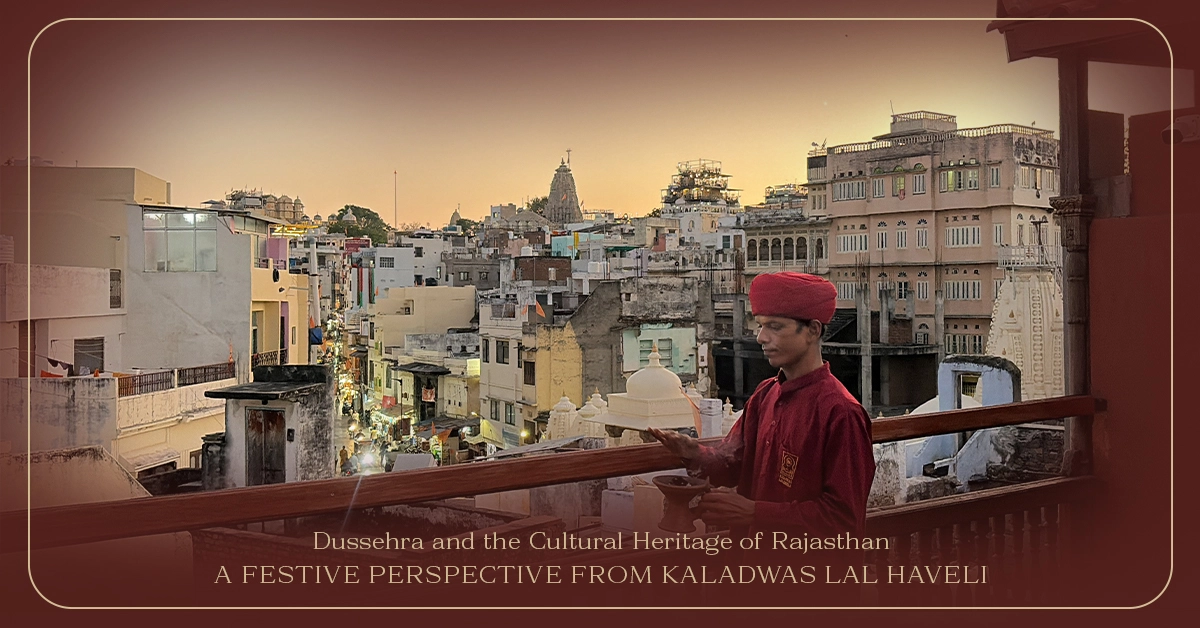
Dussehra and the Cultural Heritage of Rajasthan: A Festive Perspective from Kaladwas Lal Haveli
Dussehra celebrates the victory of good over evil through stories and traditions passed down through generations. In Rajasthan, the festival reflects diverse cultural identities, religious beliefs and regional customs.
For travellers visiting Udaipur, it offers an opportunity to discover the heritage of Mewar beyond its famous palaces and lakes. From historic streets to traditional crafts and local food, the city reveals a rich cultural landscape. Kaladwas Lal Haveli, a restored 300-year-old heritage haveli in Udaipur’s Old City, provides a historic setting from which to explore this heritage.
Understanding Dussehra: The Meaning Behind Vijayadashami
- Victory of good over evil: Dussehra, also known as Vijayadashami, celebrates the triumph of good over evil.
- The story of Lord Rama: The Ramayana describes Lord Rama’s victory over Ravana. In many regions, this story is represented through Ramlila performances and the burning of Ravana’s effigy.
- The victory of Goddess Durga: In other traditions, Vijayadashami marks Goddess Durga’s triumph over Mahishasura, symbolising the defeat of destructive forces.
- A festival of values: Dussehra encourages reflection on courage, righteousness, responsibility and justice.
- Different ways of celebrating: Observances may include religious ceremonies, cultural performances, public fairs and family traditions. Customs vary across regions and communities.
Understanding these different traditions helps travellers appreciate Dussehra as a festival shaped by local beliefs, histories and cultural practices.
Dussehra in Rajasthan: Traditions, History and Regional Identity
- Regional diversity: Rajasthan’s festivals reflect its history, religious traditions, craftsmanship and community life. Dussehra celebrations differ from one city to another.
- Kota’s famous fair: Kota hosts a well-documented Dussehra fair featuring religious programmes, cultural performances and representations of the Rama-Ravana story.
- Community participation: The fair illustrates how a religious occasion can become a wider public celebration involving storytelling and cultural activities.
- Udaipur’s distinct identity: Mewar has its own historical and cultural character, shaped by its former kingdom, religious institutions, architecture and arts.
- Explore local traditions: Travellers should check local announcements and verified event information rather than assuming that every city follows the same customs.
Recognising these regional differences makes exploring Rajasthan’s cultural heritage more meaningful and helps visitors appreciate each destination on its own terms.
Udaipur and the Living Heritage of Mewar
- A historic capital: Founded by Maharana Udai Singh II in 1553 as the new capital of Mewar, Udaipur developed among the hills and lakes of the Girwa Valley.
- Architecture and old neighbourhoods: Traditional façades, narrow streets, temples and historic buildings reveal the city’s architectural character.
- Jagdish Temple and City Palace: These landmarks offer insight into Udaipur’s religious, architectural and historical heritage.
- Lake Pichola and its ghats: The lakeside landscape illustrates the connection between water, religious spaces and the city’s historic development.
- Craftsmanship and cuisine: Local crafts and traditional Mewari food provide further insight into the region’s cultural identity.
- Living traditions: Heritage continues through the people who maintain historic buildings, practise traditional skills and pass local knowledge between generations.
Visitors should distinguish general heritage attractions from specific Dussehra ceremonies and confirm event details before planning their visit.
Experiencing Rajasthan’s Festive Culture Through Heritage Hospitality
- Stay connected to local history: Heritage hotels offer an opportunity to experience traditional architecture and explore the surrounding historic neighbourhood.
- Discover Kaladwas Lal Haveli: This restored 300-year-old haveli in Udaipur’s Old City features seven individually themed rooms, heritage-inspired interiors and contemporary comforts.
- Explore the neighbourhood: Walking through nearby streets and historic areas helps visitors understand Udaipur beyond its major tourist attractions.
- Experience Mewari cuisine: Regional ingredients, cooking methods and traditional meals offer another perspective on Rajasthan’s cultural identity.
- Learn through cultural experiences: Heritage walks and other cultural activities can provide context about the city’s history and traditions.
- Plan festival activities carefully: Any Dussehra-specific ceremony, performance or package should be confirmed through official information.
For travellers seeking a heritage boutique hotel in Udaipur, Kaladwas Lal Haveli offers a historic setting from which to discover the architecture, food and cultural character of Mewar.
Discovering Udaipur Beyond the Festival
- Walk through the Old City: Explore historic lanes, traditional buildings, local businesses and neighbourhood life.
- Visit important landmarks: The Jagdish Temple area and City Palace surroundings provide insight into Udaipur’s history and architecture.
- Explore Lake Pichola: The ghats and lakeside surroundings offer a different perspective on the city’s historic landscape.
- Discover local crafts and food: Markets, craft shops and regional cuisine help visitors connect with local culture.
- Check Dussehra event details: Confirm venues, timings and transport arrangements in advance, as schedules and access may change.
- Travel respectfully: Follow religious-site guidelines, ask permission before photographing people and remain considerate of local residents and businesses.
- Leave time for discovery: Exploring beyond scheduled attractions allows visitors to notice the smaller details that make Udaipur distinctive.
Combining famous landmarks with local experiences offers a more balanced understanding of the city’s heritage and everyday cultural life.
Bringing the Meaning of Dussehra Into a Heritage Stay
- Understand the festival’s message: Dussehra’s stories of courage, responsibility and the triumph of good over evil continue to hold meaning across generations.
- Look beyond celebrations: Learning about local history, traditions and communities can make a cultural visit more rewarding than attending an event alone.
- Discover Mewar’s heritage: Udaipur’s architecture, religious spaces, craftsmanship and neighbourhoods provide a wider context for exploring Rajasthan.
- Stay at a historic property: Kaladwas Lal Haveli connects guests with the character of Udaipur’s Old City through its heritage architecture and setting.
- Appreciate living culture: Curiosity, respectful exploration and an understanding of regional differences help travellers experience traditions more meaningfully.
Dussehra offers an opportunity to discover the stories and values that shape Rajasthan’s cultural identity. At Kaladwas Lal Haveli, the historic setting and Old City location provide a starting point for exploring Udaipur’s heritage, history and living traditions.
FAQs
Why is Dussehra celebrated in Rajasthan?
Dussehra, or Vijayadashami, is associated with the victory of good over evil. In many traditions, it marks Lord Rama’s victory over Ravana; in others, it is associated with Goddess Durga’s victory over Mahishasura. Rajasthan’s communities may observe the occasion through religious practices, public gatherings and regional celebrations, with customs varying by location.
How is Dussehra observed in Udaipur?
Udaipur’s cultural identity is closely associated with Mewar’s history, architecture and religious traditions. However, specific Dussehra events should be confirmed through current local announcements rather than assumed from celebrations elsewhere in Rajasthan. Visitors can also explore the Old City, historic religious spaces, markets and architecture to understand the wider cultural context of the region.
What cultural traditions can travellers explore in Rajasthan during Dussehra?
Depending on the destination and the year’s programme, travellers may find religious observances, Ramlila performances, public fairs or community celebrations. Kota is particularly known for its Dussehra fair. Visitors should check official tourism information for confirmed dates, venues and activities before making plans.
Is Dussehra a good time to visit Udaipur?
Dussehra can be an opportunity to combine an interest in festivals with Udaipur’s historic architecture, Old City neighbourhoods, regional food and cultural heritage. The value of the visit will depend on individual interests and the events taking place that year. Checking local schedules, accommodation availability and travel arrangements in advance is advisable.
Why choose a heritage boutique hotel in Udaipur for a cultural trip?
A heritage boutique hotel can connect accommodation with the destination through historic architecture, traditional design and a location within an older neighbourhood. At Kaladwas Lal Haveli, the heritage setting and Old City location provide a starting point for exploring Udaipur’s cultural landscape while enjoying contemporary comforts.