

Reception: +91-830 290 2727
Office: +91-830 290 2727
E-mail: kaladwaslalhaveli@gmail.com
Address: 96, Chawra House Ganesh Ghati Udaipur, Rajasthan 313001
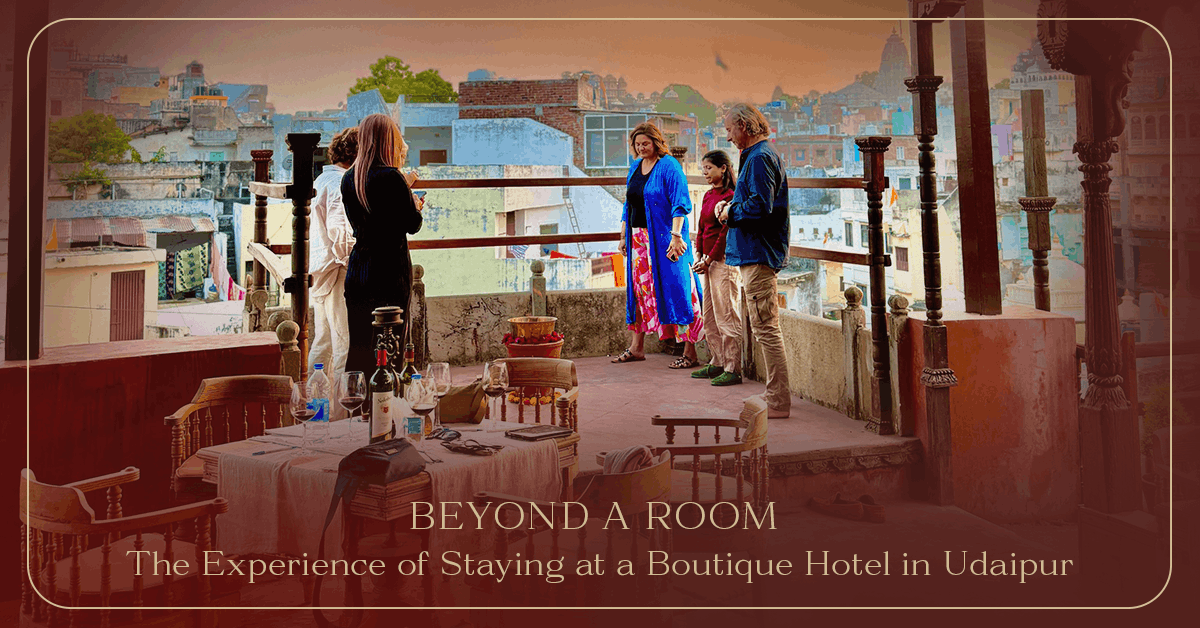
Beyond a Room: The Experience of Staying at a Boutique Hotel in Udaipur
A hotel room is usually thought of as a practical part of travel: somewhere to leave your luggage, sleep after a long day and prepare for the next morning.
But in a city like Udaipur, where architecture, neighbourhoods, food and history are closely intertwined, accommodation can become part of the destination itself.
This is where the appeal of a boutique hotel in Udaipur begins.
A boutique stay is less about uniformity and more about character. The building has its own identity. Rooms may have individual stories. Shared spaces invite you to linger. Food, architecture and local experiences can add context to the city outside.
At a heritage property such as Kaladwas Lal Haveli, this idea becomes particularly tangible. The property is a restored 300-year-old haveli in Udaipur’s Old City, combining its historic character with contemporary hospitality.
The result is a different kind of stay, one where the room is only the beginning.
What Makes a Boutique Hotel Experience Different?
A boutique hotel is generally smaller and more character-led than a conventional large hotel. Instead of creating identical rooms and a standardised atmosphere, it gives greater importance to individuality, design and a sense of place.
That difference becomes meaningful when travelling somewhere with a strong cultural identity.
In Udaipur, a hotel can reflect the city through its architecture, interiors, food, setting and experiences. The accommodation becomes another way of encountering Rajasthan rather than a neutral space separate from it.
At Kaladwas Lal Haveli, the seven rooms are individually themed around different aspects of Rajasthan and Mewar. The property describes them as spaces designed to reflect heritage, traditional architecture, cultural stories and craftsmanship.
So the experience begins before you leave for sightseeing.
You are already somewhere with a story.
Staying Inside a 300-Year-Old Haveli
There is a particular feeling that comes from staying inside a building that existed long before your trip.
At Kaladwas Lal Haveli, the hotel’s identity begins with its 300-year-old heritage haveli. The property has been restored and adapted into a boutique hotel while retaining elements of its historic architectural character.
This changes how you experience the building.
An arch is no longer simply an attractive architectural feature. A courtyard is not just an open area. A carved doorway or traditional detail becomes part of a larger story about the building and the craftsmanship associated with it.
You start noticing things.
The proportions of a space. The texture of an old surface. The way natural light moves through a courtyard. The contrast between preserved details and contemporary comforts.
Heritage becomes something you inhabit rather than something you see for an hour during sightseeing.
Your Room Can Become Part of the Story
One of the defining pleasures of boutique accommodation is individuality.
At Kaladwas Lal Haveli, the rooms are not presented as interchangeable spaces. Each has a separate theme and identity connected with Rajasthan or Mewar. The current room collection includes Rakht Chandan, Pratikriti, Badal Mahal, Kalangi, Kesari, Junoo and Van Grahana.
Rakht Chandan draws on the legacy of Mewar’s warriors. Pratikriti incorporates intricately carved mirrors. Badal Mahal takes inspiration from clouds and monsoon skies, while Kalangi reflects the visual and cultural associations of a Mewari wedding. Junoo connects particularly strongly with the age of the haveli, while Van Grahana takes its inspiration from nature.
This approach changes the role of the room.
It is no longer simply a category chosen for its size or facilities.
The room becomes another chapter in the experience.
For travellers who care about culture and design, that distinction can make a short stay feel considerably more personal.
The Old City Becomes Part of Your Stay
Where a hotel is located influences how you experience a destination.
Kaladwas Lal Haveli is situated in Udaipur’s historic Old City, around the Ganesh Ghati area. Its location places guests close to landmarks and historic parts of the city, including Jagdish Temple, Gangaur Ghat, Ghanta Ghar and Lake Pichola.
But the real advantage of an Old City location is not simply being close to attractions.
It is close to everyday life.
Historic lanes have their own rhythm. Shops open and close. Artisans work. Temples continue their daily rituals. Streets become busier and quieter at different times of the day.
When your accommodation is part of this environment, you encounter Udaipur repeatedly rather than only during planned sightseeing.
You can step out in the morning, return during the afternoon, and wander through the neighbourhood again after sunset.
The city gradually becomes familiar.
Beyond Sightseeing: Experiences That Stay With You
A boutique hotel can also influence what you do between major sightseeing stops.
At Kaladwas Lal Haveli, the property highlights experiences including heritage walks, cultural interactions, culinary sessions, folk performances and rooftop dining.
These experiences are valuable because they add context.
A heritage walk can change how you look at an old street.
A conversation about local food can make a familiar dish more meaningful.
A folk performance can introduce a cultural tradition in a setting that feels connected to the destination.
The objective is not to fill every hour with activities.
It is to make the hours you spend at the hotel feel connected to where you are.
That is an important difference between simply staying somewhere and experiencing a place.
Dining Is Part of the Destination Experience
Food can be one of the most immediate ways to connect with a region.
In Rajasthan, traditional cuisine carries traces of geography, climate, available ingredients and generations of culinary practice. For a traveller, trying regional food is therefore about more than choosing something different from the usual menu.
At Kaladwas Lal Haveli, the property highlights Mewari and Rajasthani cuisine as part of its heritage positioning, alongside its dining spaces and cultural experiences.
There is also a practical pleasure to dining within a heritage hotel.
After a day spent walking through Udaipur, you do not always need to go back into the streets immediately.
You can slow down.
A meal, followed by an evening on the rooftop or within the hotel’s heritage setting, can become part of the memory of the day.
Sometimes the most memorable travel experiences happen when the itinerary finally stops.
Rooftop Evenings Change the Rhythm
Udaipur is a city best appreciated from different perspectives.
The streets give you movement and detail. The lakes offer openness. Historic buildings reveal another layer of the city from ground level.
A rooftop offers a different view altogether.
Kaladwas Lal Haveli highlights its rooftop restaurant and rooftop experiences as part of the property. The hotel also describes rooftop dinners accompanied by live folk performances as one of its cultural offerings.
This creates a natural transition from daytime exploration to evening relaxation.
The city continues below while the pace at the hotel slows.
For travellers, this is one of the advantages of boutique hospitality: shared spaces can become part of the emotional rhythm of a trip rather than merely functional hotel facilities.
The Quiet Luxury of Personalised Hospitality
Luxury is not always about scale.
Sometimes it is about attention.
A smaller boutique property can create a different relationship between guest and hotel. The atmosphere tends to feel more personal because the property itself has a stronger identity and the experience is less anonymous.
Kaladwas Lal Haveli describes personalised hospitality as part of its approach, including a traditional Rajasthani welcome and experiences shaped around guest interests.
For a traveller, this can be especially valuable in a destination as layered as Udaipur.
A useful local recommendation may change in the afternoon.
A suggestion about where to eat can introduce you to something you would not have found through a generic search.
A thoughtful explanation of the property’s history can make you look differently at the architecture around you.
Good hospitality does not need to be elaborate.
Often, it is simply attentive.
Heritage Does Not Mean Giving Up Modern Comfort
Choosing a heritage hotel does not mean choosing between history and convenience.
The purpose of thoughtful restoration is to allow a historic building to remain useful without losing the qualities that make it significant.
Kaladwas Lal Haveli describes its restoration as carefully preserving the essence of the haveli while integrating structural reinforcement and contemporary comfort. Its rooms are equipped with modern amenities while retaining heritage-inspired design.
This balance matters.
A traveller should be able to appreciate traditional architecture without feeling as though they have stepped into a museum.
The best heritage stays allow the building to retain its personality while supporting the practical needs of a modern guest.
That is where heritage becomes hospitality.
A Boutique Hotel Can Change How You Explore Udaipur
The experience of staying somewhere with character can influence the way you spend time outside the hotel.
When your accommodation itself feels connected to Udaipur, you may be less inclined to rush through the city.
You might take a longer walk.
Return to the hotel for an afternoon pause.
Explore a nearby market without an exact timetable.
Spend the evening on the rooftop instead of searching for another attraction.
This is one of the understated advantages of boutique accommodation: it can encourage a slower relationship with the destination.
You are not simply using the hotel as a base.
You are allowing the hotel to become part of the journey.
Why Kaladwas Lal Haveli Is More Than a Room
The appeal of Kaladwas Lal Haveli lies in how its different elements connect.
There is the 300-year-old haveli.
There are the individually themed rooms.
There is the Old City setting.
There are the heritage details and restored architecture.
There are opportunities to experience local food and cultural traditions.
And there are spaces such as the rooftop where the atmosphere of Udaipur can be appreciated from a different perspective.
None of these elements needs to carry the entire experience on its own.
Together, they create a sense of place.
That is what makes a heritage boutique hotel in Udaipur different from accommodation that could exist almost anywhere.
Beyond a Room, Into the Destination
The most memorable hotels are often remembered for how they made a destination feel.
You remember the architecture you woke up around.
The meal you had after a long day.
The street you walked through on your way back.
The rooftop where the city looked different at night.
The room whose design had a story of its own.
These memories are not separate from the hotel.
They are the hotel experience.
At Kaladwas Lal Haveli, the idea begins with a 300-year-old restored haveli and extends through its rooms, architecture, hospitality, dining, rooftop and connection with Udaipur’s Old City.
For travellers seeking a boutique hotel in Udaipur, that is perhaps the real appeal of staying somewhere with character.
The room gives you a place to rest.
The property gives you a sense of place.
And the destination gives the entire stay its meaning.
FAQs
What makes staying at a boutique hotel different from a standard hotel?
A boutique hotel generally places greater emphasis on individuality, design, atmosphere and personalised hospitality. In a heritage property, the building and its cultural setting can also become part of the overall travel experience.
Why choose a boutique hotel in Udaipur?
A boutique hotel can offer a more characterful way to experience Udaipur, particularly when it reflects the city’s architecture and culture. A property in the Old City can also make it easier to experience historic neighbourhoods and landmarks.
What makes Kaladwas Lal Haveli a heritage boutique hotel?
Kaladwas Lal Haveli is a restored 300-year-old haveli in Udaipur’s Old City. Its seven individually themed rooms, traditional architectural character and connection with Mewari and Rajasthani heritage form the foundation of its boutique stay experience.
What experiences are available at Kaladwas Lal Haveli?
The property highlights experiences including heritage walks, cultural interactions, culinary sessions, folk performances and rooftop dining. Availability of specific experiences may vary, so guests should confirm arrangements with the hotel.
Is Kaladwas Lal Haveli suitable for travellers interested in heritage architecture?
Yes. The property is centred around a restored 300-year-old haveli and preserves traditional architectural character while providing contemporary hospitality. Its rooms and common spaces are designed around Rajasthan and Mewar’s cultural identity.