

Reception: +91-830 290 2727
Office: +91-830 290 2727
E-mail: kaladwaslalhaveli@gmail.com
Address: 96, Chawra House Ganesh Ghati Udaipur, Rajasthan 313001
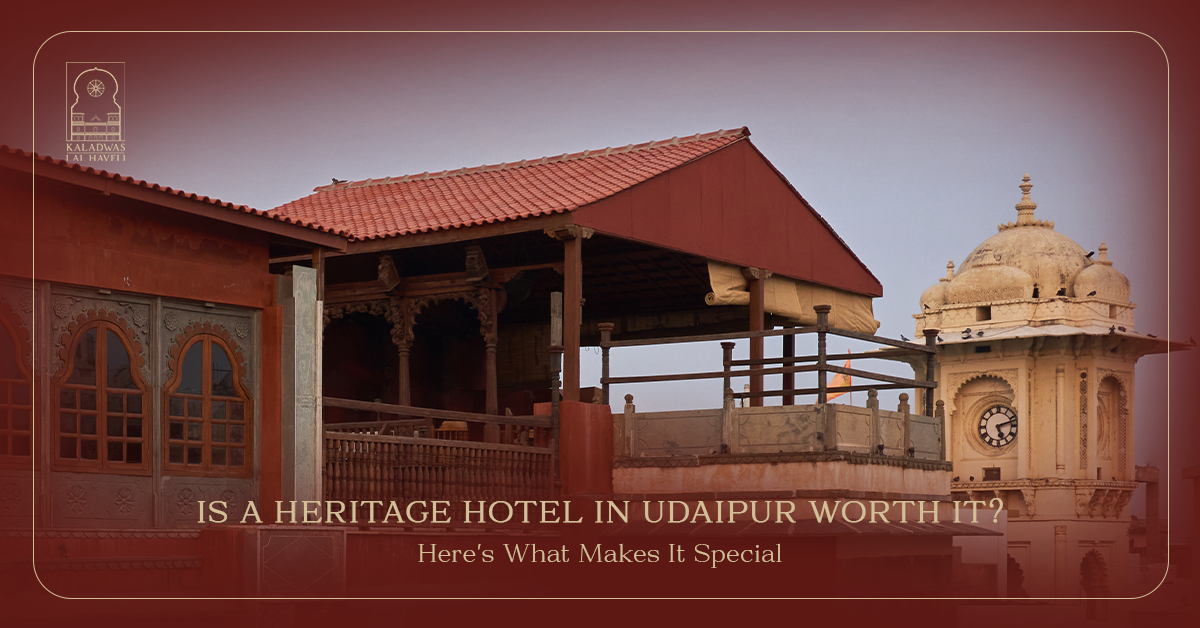
Is a Heritage Hotel in Udaipur Worth It? Here’s What Makes It Special
Some cities are best explored through monuments. Udaipur is best experienced through the places you stay.
Known as the City of Lakes, Udaipur captivates visitors with its shimmering palaces, centuries-old temples, winding lanes, bustling bazaars, and timeless stories of the Mewar dynasty. While sightseeing reveals the city’s beauty, staying in a Heritage Hotel Udaipur offers something far more meaningful—it allows you to become part of its living history.
Unlike contemporary hotels, heritage properties preserve architectural traditions, handcrafted interiors, local artistry, and the warm hospitality that Rajasthan is celebrated for. Every carved doorway, stone courtyard, painted arch, and rooftop terrace reflects generations of craftsmanship and culture.
For many travelers, choosing a heritage stay transforms an ordinary holiday into an immersive cultural journey. Instead of simply visiting historical landmarks during the day and returning to a standard hotel at night, guests continue experiencing the city’s heritage long after sightseeing ends.
Whether you’re planning a romantic escape, a family holiday, a cultural expedition, or a photography-focused trip, a thoughtfully restored heritage hotel offers a deeper connection with Udaipur’s traditions, architecture, and way of life.
Among the city’s historic neighborhoods, staying in the Old City places you within walking distance of celebrated attractions such as City Palace, Jagdish Temple, Bagore Ki Haveli, vibrant local markets, and picturesque lakeside promenades—making exploration both convenient and authentic.
This guide explains what truly defines a heritage hotel, what makes the experience different from a modern luxury stay, and why many travelers consider it one of the most memorable ways to experience Udaipur.
Is a Heritage Hotel in Udaipur Worth It?
Yes. A heritage hotel in Udaipur offers much more than accommodation. It combines historic architecture, authentic Rajasthani hospitality, cultural experiences, and prime access to the city’s historic landmarks. For travelers seeking meaningful experiences, heritage stays provide an immersive way to understand Udaipur’s history, art, and local lifestyle while enjoying modern comforts.
At a Glance
| Looking For | Why a Heritage Hotel Stands Out |
| Authentic cultural experience | Stay in a restored historic property with traditional architecture. |
| Convenient sightseeing | Many heritage hotels are located near Udaipur’s major attractions. |
| Romantic atmosphere | Courtyards, rooftop views, heritage suites, and timeless surroundings create a memorable setting. |
| Local hospitality | Personalized service often reflects traditional Rajasthani warmth and customs. |
| Photography | Historic architecture, handcrafted details, and heritage interiors provide exceptional photo opportunities. |
Why This Matters
Choosing where to stay is one of the most important decisions when planning a trip to Udaipur. Travelers often compare heritage hotels with modern luxury hotels, boutique stays, homestays, and international chains—wondering which option will offer the best overall experience.
Common questions include:
- Is a heritage hotel worth the additional cost?
- Will it have modern comforts?
- Is it suitable for families and couples?
- Does staying in the Old City make sightseeing easier?
- Are heritage hotels genuinely historic or simply designed to look traditional?
The answers depend on the type of experience you’re seeking.
If your priority is contemporary amenities alone, a modern hotel may meet your needs. But if you want your accommodation to become part of your journey—rather than just a place to sleep—a heritage hotel offers something distinctly different. It surrounds you with architecture, craftsmanship, local traditions, and stories that continue well beyond your daily sightseeing.
Location also plays a significant role. Udaipur’s historic core is home to many of the city’s iconic attractions, making it easier to explore on foot, pause at lakeside cafés, browse artisan markets, and experience the city’s atmosphere at a relaxed pace.
For travelers who value culture, architecture, and meaningful travel experiences, the choice of stay can shape how they remember Udaipur long after the journey ends.
What Is a Heritage Hotel?
A heritage hotel is a historic building—such as a haveli, palace, mansion, or fort—that has been carefully restored and adapted into accommodation while preserving its original architectural character, cultural significance, and traditional craftsmanship. These properties combine authentic heritage with modern comforts, allowing guests to experience the history and culture of a destination in a unique and immersive way.
What Makes a Heritage Hotel Different?
A heritage hotel is defined not just by its age but by the experience it offers. Instead of standardized rooms and contemporary interiors, guests are surrounded by architecture and design that reflect the region’s cultural identity.
Typical features include:
- Historic havelis, palaces, or restored mansions
- Traditional Rajasthani architecture and craftsmanship
- Hand-carved wooden doors and stone facades
- Courtyards that encourage relaxed gatherings
- Individually designed heritage rooms or suites
- Locally inspired décor and handcrafted furnishings
- Rooftop spaces overlooking the historic city
- Personalized hospitality with a boutique feel
- Easy access to cultural landmarks and local neighborhoods
These elements create a stay that feels connected to the destination rather than separate from it.
Is Staying in a Heritage Hotel in Udaipur Worth It?
For many travelers, the answer lies in the experiences they hope to take home.
A modern hotel may offer consistency, but a heritage hotel offers character. Every corridor, staircase, courtyard, and terrace reflects layers of history that cannot be recreated in newly built properties.
In Udaipur, where centuries-old architecture forms the heart of the city’s identity, staying in a restored haveli allows visitors to appreciate this heritage beyond museums and monuments. Morning light filtering through carved windows, evenings spent overlooking historic rooftops, and conversations with local hosts often become highlights of the journey.
The experience is particularly rewarding for:
- Couples seeking a romantic atmosphere
- Heritage and architecture enthusiasts
- International visitors exploring Rajasthan
- Families introducing children to India’s cultural history
- Solo travelers interested in authentic local experiences
- Photographers looking for timeless architectural details
- Luxury travelers seeking boutique hospitality with a sense of place
Rather than simply offering accommodation, heritage hotels become an extension of the destination itself.
Heritage Hotel vs Modern Hotel in Udaipur
| Feature | Heritage Hotel | Modern Hotel |
| Architecture | Historic haveli or palace with original character | Contemporary building and design |
| Experience | Immersive cultural stay | Primarily accommodation-focused |
| Design | Handcrafted interiors and regional craftsmanship | Standardized contemporary décor |
| Atmosphere | Boutique, intimate, and locally inspired | Modern, consistent, and business-oriented |
| Location | Often in or near Udaipur’s historic Old City | May be spread across different parts of the city |
| Cultural Connection | Strong emphasis on local heritage and traditions | Limited connection to local history |
| Photography | Rich architectural details and heritage aesthetics | Modern interiors and facilities |
| Hospitality | Personalized boutique service | Standardized hotel service |
The Complete Guide to Choosing a Heritage Hotel in Udaipur
1. Look Beyond the Age of the Property
Not every old building qualifies as a true heritage stay. A genuine heritage hotel preserves the essence of its original architecture while thoughtfully integrating modern comforts. Restoration should respect the building’s historic character rather than replace it with contemporary design.
When researching options, pay attention to details such as restored courtyards, traditional stonework, hand-painted walls, antique architectural elements, and locally crafted furnishings. These features often reflect the property’s commitment to preserving its heritage.
2. Consider the Location
One of the greatest advantages of choosing a heritage hotel is the opportunity to stay close to the city’s cultural heart.
Properties located in Udaipur’s Old City provide convenient access to many of the city’s most celebrated landmarks. Walking through narrow lanes, discovering artisan shops, stopping at lakeside cafés, and exploring historic neighborhoods becomes part of the daily experience rather than a planned excursion.
For travelers who enjoy exploring on foot, staying near attractions such as City Palace, Jagdish Temple, and Bagore Ki Haveli can make the journey more relaxed and immersive.
3. Experience Architecture That Tells a Story
One of the greatest joys of staying in a Heritage Hotel Udaipur is discovering that the building itself becomes an attraction. Unlike modern hotels designed around uniformity, heritage havelis celebrate individuality. Every archway, courtyard, carved balcony, and handcrafted doorway reflects artistic traditions that have evolved over centuries.
Rajasthani heritage architecture is known for blending beauty with practicality. Thick stone walls help regulate indoor temperatures, intricately carved jharokhas (overhanging balconies) provide shade while allowing natural ventilation, and open courtyards create welcoming spaces where families and travelers have gathered for generations.
Rather than hiding signs of age, thoughtfully restored heritage properties preserve original materials and craftsmanship wherever possible. The result is an atmosphere that feels authentic, lived-in, and deeply connected to the city’s history.
As you move through these spaces, you’ll notice details that often go unnoticed in museums—hand-painted ceilings, traditional motifs, antique wooden doors, decorative stone latticework, and artisanal furniture inspired by Mewar’s rich cultural heritage.
For architecture enthusiasts, every corner offers a glimpse into Rajasthan’s timeless design philosophy, where artistry and everyday living exist in harmony.
4. Discover the Living Culture of Udaipur
A visit to Udaipur isn’t just about seeing historic landmarks; it’s about experiencing a city where traditions continue to thrive.
Staying in a heritage property naturally brings you closer to this living culture. Morning temple bells, the aroma of freshly prepared local cuisine, colorful markets opening for the day, and evening folk performances all contribute to an atmosphere that’s uniquely Udaipur.
Throughout the city, travelers can explore experiences such as:
- Watching traditional Rajasthani folk dance and music performances
- Visiting artisan workshops known for miniature paintings and handcrafted souvenirs
- Exploring vibrant textile and handicraft markets
- Learning about Mewar’s royal legacy through museums and historic sites
- Sampling regional dishes prepared using generations-old recipes
Unlike curated tourist attractions, these moments often unfold organically when you stay in the heart of the Old City, allowing you to engage with local traditions at your own pace.
Nearby Attractions That Define Udaipur
One of the biggest advantages of staying in Udaipur’s historic center is that many of its iconic attractions are located within walking distance or a short drive.
City Palace
Overlooking Lake Pichola, the City Palace is one of Rajasthan’s most celebrated architectural landmarks. Built over several centuries, the palace complex showcases grand courtyards, museums, balconies, royal apartments, and sweeping views of the lake and city.
Allow at least half a day to fully appreciate its scale, architecture, and history.
Jagdish Temple
Just a short walk from City Palace, Jagdish Temple remains one of Udaipur’s most active places of worship. Dedicated to Lord Vishnu, the temple is admired for its beautifully sculpted pillars, intricate carvings, and spiritual atmosphere.
Early morning visits offer a quieter experience and beautiful natural light for photography.
Bagore Ki Haveli
Located along the Gangaur Ghat waterfront, Bagore Ki Haveli provides insight into royal life through restored rooms, traditional artifacts, and evening cultural performances.
The evening folk dance program is particularly popular among visitors seeking an introduction to Rajasthan’s music, dance, and storytelling traditions.
Lake Pichola
A boat ride across Lake Pichola is often considered one of the highlights of visiting Udaipur.
From the water, visitors enjoy unique views of:
- City Palace
- Jag Mandir
- Lake Palace
- Historic ghats
- Hills surrounding the city
Sunset cruises are especially memorable, offering changing colors across the lake and palace facades.
Gangaur Ghat
This lakeside promenade offers a peaceful place to observe daily life in Udaipur. Locals gather here for evening prayers, photographers capture reflections across Lake Pichola, and visitors enjoy a slower pace away from busy streets.
It is also one of the city’s best sunrise photography locations.
Local Markets
Exploring Udaipur’s markets is an experience in itself.
Popular shopping areas include:
- Handmade miniature paintings
- Silver jewelry
- Block-printed textiles
- Leather journals
- Handcrafted wooden décor
- Marble souvenirs
- Traditional Rajasthani clothing
- Local spices and tea
The narrow lanes around the Old City reward travelers who enjoy discovering independent artisan shops rather than large commercial stores.
Experience Local Flavours
Food plays an important role in understanding Rajasthan’s culture.
From traditional family recipes to rooftop dining overlooking centuries-old neighborhoods, every meal becomes part of the travel experience.
Must-try local dishes include:
- Dal Baati Churma
- Gatte Ki Sabzi
- Ker Sangri
- Laal Maas
- Safed Maas
- Pyaaz Kachori
- Mirchi Vada
- Rabdi
- Ghewar
- Mawa Kachori
Many visitors also enjoy relaxing at rooftop restaurants after a day of sightseeing, where city views and traditional cuisine create memorable evenings.
Why Rooftop Dining Feels Different in Udaipur
Unlike cities defined by skylines, Udaipur’s rooftops overlook domes, temples, palaces, historic homes, and distant hills.
As daylight fades, the city gradually transforms.
Temple bells echo through the streets, lights begin reflecting on nearby lakes, and historic buildings glow against the evening sky. Dining above the Old City allows travelers to slow down and appreciate this unique atmosphere while enjoying regional and Indian cuisine.
Rather than simply eating a meal, rooftop dining becomes an extension of the destination experience.
Photography Opportunities Around Every Corner
Udaipur has long attracted photographers, artists, filmmakers, and travel creators for its timeless aesthetic.
Some of the best photography opportunities include:
Architecture
- Heritage havelis
- Stone archways
- Historic courtyards
- Ornate balconies
- Decorative doorways
Lakes
- Sunrise at Gangaur Ghat
- Sunset on Lake Pichola
- Reflections of City Palace
- Early morning boat rides
Streets
- Narrow Old City lanes
- Traditional blue and pastel-colored homes
- Artisan workshops
- Local markets
Culture
- Folk performances
- Festival decorations
- Temple rituals
- Colorful textiles
- Local craftsmanship
Golden hour—shortly after sunrise and before sunset—offers the most flattering natural light for capturing Udaipur’s heritage architecture.
Hidden Gems Worth Exploring
While famous attractions deserve their reputation, Udaipur also rewards travelers who venture beyond the main tourist route.
Consider exploring:
- Quiet heritage lanes in the Old City
- Lesser-known temples tucked between historic homes
- Small cafés overlooking Lake Pichola
- Independent art galleries
- Traditional miniature painting studios
- Handmade textile workshops
- Riverside walking paths during early mornings
These experiences often become the most memorable because they reveal the quieter rhythm of everyday life in Udaipur.
Local Expert Tips for an Authentic Experience
Best Time to Visit
- October to March: Pleasant weather for sightseeing, boating, and walking tours.
- July to September: The monsoon enhances Udaipur’s lakes and surrounding hills, creating lush landscapes and dramatic views.
- April to June: Early mornings and evenings are ideal for exploring before temperatures rise.
Visit Popular Attractions Early
City Palace, Jagdish Temple, and Lake Pichola are most enjoyable during the first few hours after sunrise, when crowds are lighter and temperatures are cooler.
Walk Whenever Possible
The Old City is best experienced on foot. Walking allows you to discover hidden courtyards, artisan shops, cafés, and architectural details that are easy to miss by car.
Wear comfortable footwear, as many streets are narrow and uneven.
Dress Respectfully
When visiting temples and religious sites:
- Wear modest clothing.
- Remove footwear where required.
- Ask permission before photographing worshippers or ceremonies.
- Speak quietly inside sacred spaces.
Respecting local customs enhances both your experience and your interaction with residents.
Taste Local Food Beyond Restaurants
In addition to established restaurants, try trusted local eateries recommended by residents or your hotel team. Traditional breakfast snacks, regional sweets, and seasonal specialties often provide a deeper understanding of Rajasthan’s culinary heritage.
How a Heritage Stay Completes the Udaipur Experience
A thoughtfully chosen place to stay can shape how you remember a destination. In Udaipur, where history is woven into everyday life, a heritage haveli allows that connection to continue even after you’ve returned from sightseeing.
Kaladwas Lal Haveli reflects this philosophy through its carefully preserved heritage architecture, intimate boutique setting, and location in the heart of the Old City. Housed within a beautifully restored 300-year-old haveli, the property blends traditional Rajasthani craftsmanship with the comforts expected by today’s travelers.
Its proximity to landmarks such as City Palace, Jagdish Temple, Bagore Ki Haveli, and the vibrant bazaars makes it easy to explore Udaipur on foot, while returning each evening to an atmosphere that feels calm, personal, and deeply rooted in local culture.
Guests can begin their mornings surrounded by historic architecture, spend the day discovering the city’s lakes and heritage sites, and unwind with rooftop dining overlooking the timeless skyline of Udaipur. Personalized hospitality, thoughtfully designed heritage suites, and an authentic sense of place make the stay feel less like checking into a hotel and more like becoming part of Udaipur’s continuing story.
Plan Your Heritage Stay in Udaipur
Suggested Itineraries
Half-Day Heritage Experience
Perfect for travelers with limited time who want to experience Udaipur’s historic charm.
Morning
- Explore the narrow lanes of the Old City.
- Visit Jagdish Temple.
- Walk through nearby artisan shops and handicraft stores.
Afternoon
- Tour the magnificent City Palace.
- Enjoy lunch at a rooftop restaurant overlooking the city’s historic skyline.
Evening
- Stroll along Gangaur Ghat.
- Watch the sunset over Lake Pichola before returning to your heritage stay.
One-Day Udaipur Heritage Itinerary
7:30 AM
Start the day with breakfast before heading to City Palace.
9:00 AM – 12:00 PM
Explore City Palace and its museums.
12:15 PM
Visit Jagdish Temple.
1:30 PM
Enjoy authentic Rajasthani cuisine.
3:00 PM
Visit Bagore Ki Haveli.
5:30 PM
Take a boat ride on Lake Pichola.
7:00 PM
Witness the evening atmosphere at Gangaur Ghat.
8:30 PM
End the day with rooftop dining while admiring the illuminated skyline of Udaipur.
Two-Day Heritage Itinerary
Day One
- City Palace
- Jagdish Temple
- Heritage walk through Old City
- Local shopping
- Sunset boat ride
Day Two
- Early morning photography walk
- Local cafés
- Museums and art galleries
- Traditional handicraft workshops
- Relaxed evening enjoying the city’s cultural ambience
This itinerary allows enough time to experience both famous landmarks and hidden corners without feeling rushed.
Weekend Escape
A two-night heritage stay offers the perfect balance between sightseeing and relaxation.
Highlights include:
- Walking tours
- Rooftop dining
- Heritage architecture
- Shopping in local bazaars
- Cultural performances
- Lake experiences
- Slow mornings in historic surroundings
Luxury Experience
Travelers seeking a refined experience can focus on:
- Boutique heritage accommodation
- Sunrise photography
- Private heritage walks
- Fine dining featuring regional cuisine
- Sunset boat rides
- Artisan shopping
- Evenings spent enjoying panoramic rooftop views
The emphasis is on quality experiences rather than fitting as many attractions as possible into one trip.
Family Experience
Families often enjoy combining history with interactive experiences.
Suggested activities include:
- City Palace museums
- Boat rides on Lake Pichola
- Puppet shows and folk performances
- Shopping for handcrafted souvenirs
- Exploring courtyards and historic streets together
A centrally located heritage stay reduces travel time between attractions, making sightseeing more comfortable for families.
Couple’s Heritage Escape
For couples, Udaipur naturally blends romance with history.
Recommended experiences:
- Sunrise walks through quiet Old City streets
- Visiting lakeside cafés
- Sunset boat rides
- Rooftop dinners
- Exploring hidden heritage lanes
- Shopping for handcrafted keepsakes
- Relaxing in the timeless atmosphere of a restored haveli
Rather than rushing from one attraction to another, couples often find that the city’s slower pace becomes one of its greatest attractions.
Seasonal Insights
Summer (April–June)
While afternoons can be warm, mornings and evenings remain ideal for exploring.
Travel Tips
- Begin sightseeing early.
- Visit indoor museums during midday.
- Enjoy rooftop dining after sunset.
- Stay hydrated while walking through the Old City.
Monsoon (July–September)
Many travelers consider monsoon one of Udaipur’s most photogenic seasons.
The surrounding Aravalli Hills become lush, Lake Pichola fills with rainwater, and the city’s historic architecture appears especially beautiful against dramatic skies.
Perfect for:
- Photography
- Romantic getaways
- Relaxed sightseeing
- Nature lovers
Winter (October–March)
Winter is widely regarded as the best season to visit Udaipur.
Comfortable temperatures make it easy to spend entire days exploring heritage sites, lakes, markets, and cultural attractions.
Ideal for:
- Walking tours
- Family vacations
- International travelers
- Luxury holidays
- Heritage exploration
Festival Season
Throughout the year, Udaipur celebrates festivals that showcase Rajasthan’s vibrant traditions.
Depending on your travel dates, you may experience:
- Traditional processions
- Folk music and dance
- Decorated temples
- Cultural performances
- Local fairs
- Festive markets
Booking accommodation well in advance is recommended during major festivals.
Frequently Asked Questions
1. What is a heritage hotel in Udaipur?
A heritage hotel in Udaipur is a restored historic haveli, palace, or mansion that preserves traditional architecture while offering modern comforts and personalized hospitality.
2. Is staying in a heritage hotel worth it?
Yes. Heritage hotels provide an immersive cultural experience, authentic architecture, boutique hospitality, and a deeper connection with Udaipur’s history compared to standard accommodations.
3. Are heritage hotels suitable for families?
Absolutely. Many heritage boutique hotels offer spacious suites, convenient access to attractions, and personalized service, making them ideal for family holidays.
4. Are heritage hotels good for couples?
Yes. Their historic ambience, rooftop dining, boutique atmosphere, and romantic surroundings make them especially popular with couples and honeymoon travelers.
5. Which area is best to stay in Udaipur?
The Old City is one of the most preferred areas because it offers easy access to City Palace, Jagdish Temple, Bagore Ki Haveli, Lake Pichola, cafés, and local markets.
6. Do heritage hotels provide modern amenities?
Most restored heritage hotels combine traditional architecture with contemporary comforts such as air-conditioned rooms, Wi-Fi, private bathrooms, and personalized guest services.
7. What makes Kaladwas Lal Haveli unique?
Kaladwas Lal Haveli is a carefully restored 300-year-old heritage haveli located in Udaipur’s Old City. Its heritage suites, handcrafted interiors, rooftop dining, and proximity to iconic landmarks create an authentic yet comfortable stay rooted in Mewar’s cultural heritage.
8. What is the best season to visit Udaipur?
October to March offers the most comfortable weather for sightseeing. Monsoon is also a favorite for travelers who enjoy lush landscapes and scenic lake views.
9. How many days are enough for Udaipur?
Two to three days allow enough time to explore major attractions, enjoy local cuisine, experience cultural performances, and appreciate the city’s relaxed pace.
10. Can I explore Udaipur on foot from the Old City?
Yes. Many of Udaipur’s iconic attractions, cafés, markets, and heritage sites are within walking distance when staying in the Old City.
Conclusion
Choosing where to stay in Udaipur is about more than finding a comfortable room—it’s about deciding how you want to experience the city.
A heritage hotel offers something that modern accommodations cannot easily replicate: the opportunity to live within the architectural and cultural fabric of Udaipur. From intricately carved doorways and peaceful courtyards to rooftop views and personalized hospitality, every detail contributes to a journey that feels authentic and memorable.
Whether you’re exploring grand palaces, wandering through the Old City’s winding lanes, enjoying regional cuisine, or watching the sunset over Lake Pichola, a thoughtfully restored heritage haveli allows the spirit of Udaipur to remain part of your experience from morning until night.
Kaladwas Lal Haveli embodies this philosophy with its 300-year-old heritage, carefully preserved Rajasthani architecture, boutique hospitality, and location close to many of Udaipur’s most iconic landmarks. It offers travelers the chance to experience the city’s history not only through sightseeing but also through the place they call home during their stay.
Experience Authentic Udaipur
History is best understood when it is lived, not simply observed. If you’re planning a visit to the City of Lakes, choose a stay that reflects its timeless character, rich traditions, and warm hospitality.
Stay where history lives. Experience the charm of Kaladwas Lal Haveli and discover Udaipur through the elegance of a true heritage boutique hotel.