


Why Monsoon Is the Most Magical Time to Visit Udaipur
Udaipur changes character when the monsoon arrives. The Aravalli hills turn greener, the lakes take on a fuller presence, and the old palaces and havelis look especially striking against rain-washed surroundings. Rajasthan Tourism itself describes the monsoon as a time when the state's landscapes become lush and recommends July to September for travellers looking to avoid the crowds of peak season.
For a traveller who enjoys atmospheric landscapes, heritage architecture, slower sightseeing and lakeside views, monsoon can be one of the most rewarding times to experience Udaipur. The catch? You need to plan around showers rather than trying to ignore them.

Why Visit Udaipur During the Monsoon?
Monsoon is a particularly appealing season for Udaipur because rain changes the city's landscape without taking away its heritage character. The lakes, hills, gardens and historic buildings become part of a greener, more dramatic setting.
Rajasthan Tourism lists July to September as the state's monsoon period, with typical statewide temperatures around 21°C–35°C and rainfall in the broad range of 100–165 mm. Conditions can vary considerably by location and year, so travellers should check the forecast close to their trip.
But the appeal of monsoon Udaipur isn't really about numbers on a weather chart. It is about how the city feels.
A short shower can change the light over Lake Pichola. Clouds gather around the Aravallis. The stone surfaces of old buildings become darker and more textured. And when the rain pauses, the city often feels refreshed rather than simply wet.
What Makes Monsoon in Udaipur So Magical

The Aravalli Hills Turn Green
Udaipur's relationship with the Aravallis becomes much more noticeable during the rainy season.
The city sits among hills and lakes, and Rajasthan Tourism describes Udaipur as being surrounded by the Aravalli landscape and known for its lakes and palaces.
During the monsoon, that landscape becomes one of the main reasons to slow down.
Instead of seeing dry hills in the distance, you may find greener slopes, cloudier horizons and vegetation surrounding viewpoints and roads outside the city.
For photographers, this makes a difference.
The softer sky can reduce the harsh contrast that you often get in strong afternoon sunlight. Clouds also add depth to photographs of:
- Lake Pichola
- City Palace
- Sajjangarh
- Fateh Sagar Lake
- Old City rooftops
- Aravalli viewpoints
If photography is important to you, don't automatically pack your camera away when it starts raining. The period immediately after a shower can produce some of the most interesting light of the day.

Udaipur's Lakes Become the Centre of the Experience
Udaipur is often called the City of Lakes, and monsoon makes that identity particularly relevant.
Lake Pichola, Fateh Sagar and the surrounding water bodies become even more visually connected to the landscape around them. Rajasthan Tourism highlights Udaipur's lakes and its setting among the Aravalli hills as defining features of the city.
A useful way to experience this season is to avoid treating the lakes as something you simply "tick off" your itinerary.
Instead, build time around them.
For example: Morning: Explore the Old City and heritage landmarks. Afternoon: Keep some flexibility in case of rain. Evening: Look for a viewpoint or rooftop where you can watch the changing sky.
If you plan a boat ride, check the day's operating conditions rather than assuming that every service will run normally during rain.

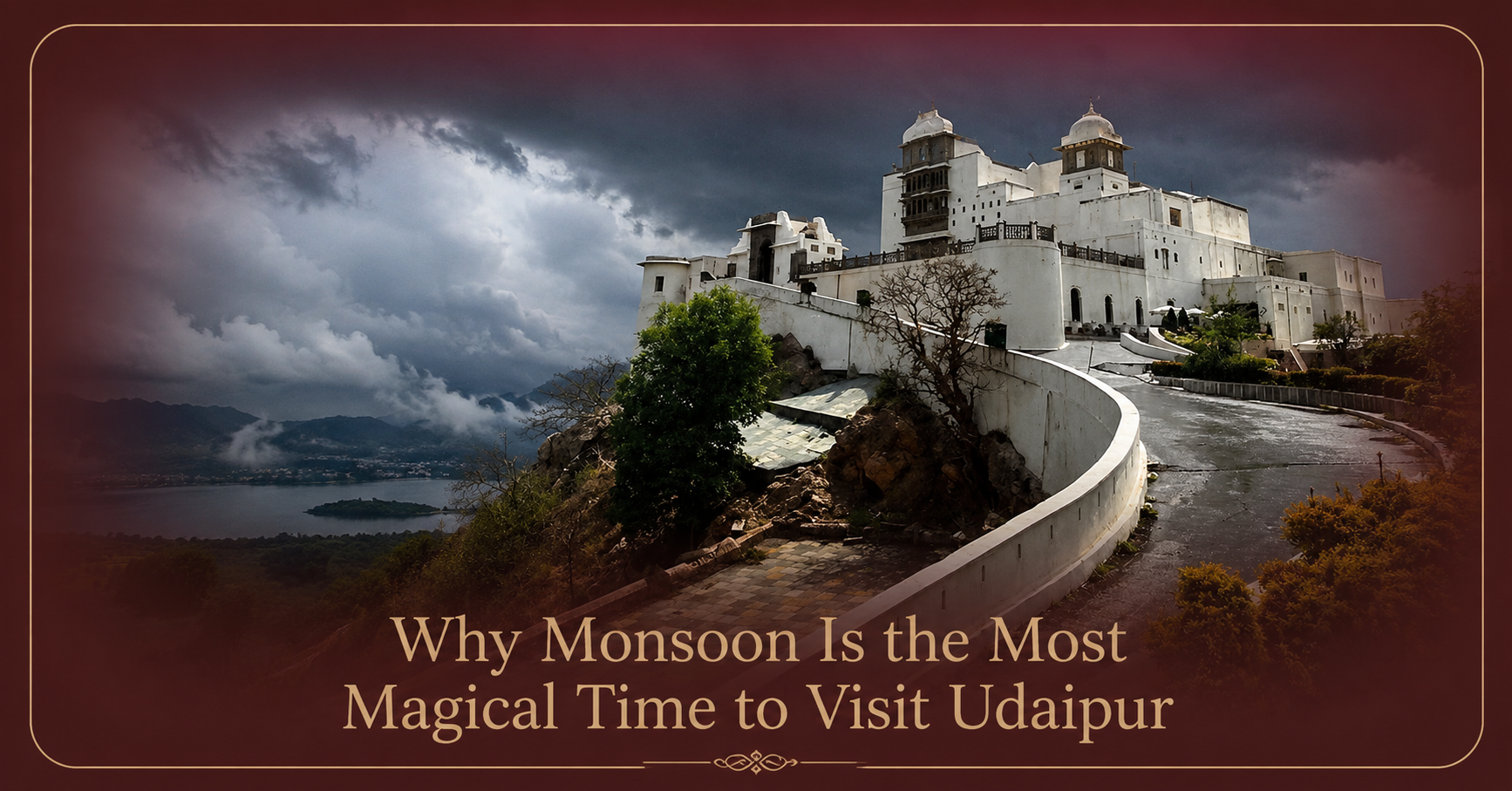
Monsoon Palace Finally Feels Like Its Name Suggests
Sajjangarh, better known as the Monsoon Palace, is one of the places where the season and the destination naturally belong together.
The 19th-century palace stands on the Bansdara Hills outside Udaipur and was originally used as a monsoon palace and hunting lodge. Rajasthan Tourism notes that it offers panoramic views over the city and surrounding areas.
On a clear day, the attraction is the panorama.
During the monsoon, the atmosphere itself becomes part of the experience.
Clouds can sit over the hills, and the city below appears against a much greener backdrop. Visibility can change quickly, however, so don't plan your entire visit around getting a perfect panoramic view.
Practical tip: If the forecast shows heavy rain or poor visibility, keep a flexible alternative in your itinerary rather than treating Sajjangarh as a guaranteed sunset stop.

Heritage Architecture Looks Different in the Rain
There is a particular advantage to visiting a heritage city during a wet season: stone, plaster, wood and painted details can appear more textured under an overcast sky.
Udaipur's heritage landscape includes the City Palace, Jagdish Temple, Bagore Ki Haveli, old-city streets and numerous traditional buildings.
Rajasthan Tourism specifically recommends exploring places such as the Monsoon Palace, City Palace and Bagore Ki Haveli during the rains, noting that Udaipur's palaces take on a distinctive appearance in the season.
This is also why monsoon works well for travellers who don't want every day to revolve around outdoor activities.
A heritage building gives you somewhere meaningful to explore even when the weather changes.

Old City Walks Become More Atmospheric
Udaipur's Old City is better explored slowly than rushed through.
The narrow streets around the historic centre connect markets, temples, ghats, cafés, small shops and heritage buildings. Rajasthan Tourism has highlighted walking and cycling routes around the Old City and Lake Pichola as ways to experience the city's streets and history.
During monsoon, that slower pace becomes even more useful.
You might walk for an hour, stop for tea when the rain arrives, continue once it eases, and discover details you would have missed while following a tightly scheduled sightseeing list.
A good monsoon walking strategy
- Start earlier in the day when practical.
- Carry compact rain protection.
- Wear footwear with a reliable grip.
- Keep your phone and camera protected.
- Leave buffer time between major attractions.
- Don't schedule every outdoor activity back-to-back.
The goal is not to avoid the rain completely. It is to make the itinerary flexible enough that rain doesn't ruin it.

Rain Makes Rooftop Views Worth Waiting For
One of the pleasures of Udaipur is seeing the city from above.
During monsoon, a rooftop can become particularly useful because it gives you somewhere to enjoy the changing weather without constantly moving between attractions.
The best moment may not be during the heaviest rain. It can be the quiet period afterward, when the clouds begin to break and the city starts drying.
This is also where choosing the right accommodation can influence the overall experience.
A heritage stay in the Old City lets you combine sightseeing with downtime rather than spending every spare hour travelling across town.

Monsoon Is Well Suited to Slow Travel
This is perhaps the strongest argument for visiting Udaipur during the rainy season.
If your idea of a holiday is:
see attraction → take photo → leave → repeat
then rain can be frustrating.
But if you prefer:
walk → explore → eat → pause → watch the weather → continue
The monsoon starts making much more sense.
The season encourages a different rhythm.
You can spend longer over a meal, sit in a café while a shower passes, explore a haveli, return to your hotel for a break and head out again when the weather improves.
For couples especially, this can make a three-day Udaipur trip feel less like a checklist and more like a stay in a living historic city.
What to Do in Udaipur During the Monsoon
Here is a practical way to structure your days.
Current attraction timings, ticketing and weather-related operating conditions should always be checked shortly before visiting.
Old City walk
Heritage streets and architecture remain interesting between showers.
Planning note: Keep footwear practical.
City Palace
Strong rainy-day option.
Planning note: Allow enough time for indoor exploration.
Bagore Ki Haveli
Adds cultural and architectural context.
Planning note: Check current timings before visiting.
Lake Pichola
Dramatic views when skies change.
Planning note: Boat operations can depend on conditions.
Fateh Sagar Lake
Green surroundings and open views.
Planning note: Better when rain is light.
Sajjangarh / Monsoon Palace
Hills and clouds create a seasonal atmosphere.
Planning note: Visibility can change quickly.
Rooftop dining
Enjoy the weather without committing to a long outdoor activity.
Planning note: Have an indoor backup.
Local markets
Useful during lighter showers.
Planning note: Carry protection for purchases.
Is Udaipur Too Rainy During Monsoon?
Not necessarily. But you should expect interruptions to outdoor plans.
July to September is Rajasthan's recognised monsoon period, and rainfall can be significant. Official Rajasthan tourism guidance also presents these months as a good period for travellers who want a different landscape and fewer peak-season crowds.
The important distinction is this:
Rain doesn't necessarily make Udaipur difficult to visit; an inflexible itinerary does.
Don't put five outdoor attractions into one afternoon.
Instead, combine outdoor and indoor experiences so that a shower simply changes the order of your day.

What Should You Pack for a Monsoon Trip to Udaipur?
Keep it practical rather than overpacking.
Essentials
- Lightweight rain jacket or compact umbrella
- Quick-drying clothes
- Comfortable walking shoes with good grip
- Waterproof pouch for phone and documents
- Extra socks
- Small day bag
- Power bank
- Mosquito repellent
- Sunscreen
A light layer can also be useful because the weather can feel different after rain, particularly in the evening.
For photographers, a waterproof camera cover or dry bag is worth considering.
A Simple 3-Day Monsoon Udaipur Itinerary
Day 1 — Old City & Heritage
Start with the historic centre and explore the heritage architecture at a comfortable pace.
Spend time around:
- City Palace
- Jagdish Temple
- Old City markets
- Gangaur Ghat
- Lake Pichola
Leave the evening flexible. If the sky clears, head to a suitable viewpoint or rooftop.
Day 2 — Lakes & Monsoon Landscapes
Plan your day around the lakes and surrounding viewpoints.
If conditions are favourable, consider a lake experience and later visit an elevated viewpoint. Sajjangarh can be particularly atmospheric during the monsoon, although visibility should be checked before setting out.
Day 3 — Slow Udaipur
Don't try to squeeze another dozen attractions into the final day.
Use the morning for anything you missed, then spend time around local cafés, markets or heritage spaces.
If the rain arrives, let it.
A slow lunch followed by a relaxed rooftop evening can be a better final memory than racing between landmarks.


Where to Stay During Monsoon in Udaipur
For a rainy-season trip, location matters almost as much as the room itself.
A stay in or around the Old City can make it easier to combine sightseeing with breaks. You can explore for a while, return to the hotel when the weather changes, and head back out later.
For travellers specifically interested in heritage hospitality, Kaladwas Lal Haveli is a 300-year-old restored haveli-turned-boutique hotel in Udaipur's Old City. Its official website describes seven themed rooms, traditional architectural elements, rooftop spaces and a location close to landmarks including Jagdish Temple, Gangaur Ghat and the Clock Tower.
That positioning is particularly relevant for a monsoon traveller who wants the stay itself to feel connected to Udaipur's heritage, rather than using the hotel only as a place to sleep.
Why Monsoon Can Be Better Than Peak Season for Some Travellers
There is no single "best" season for everyone.
If uninterrupted sunshine is your priority, another season may be more comfortable.
If you enjoy weather as part of the destination, monsoon deserves serious consideration.
If you want greener landscapes
Rain transforms the surrounding hills and vegetation.
If you want atmospheric photography
Clouds and softer light can add depth.
If you want a slower trip
Rain naturally creates pauses.
If you want lake-focused experiences
Water and surrounding hills become more visually prominent.
If you want fewer peak-season crowds
Rajasthan Tourism identifies July–September as a period suited to avoiding typical peak-season crowds.
If you want heritage-focused travel
Palaces, havelis and indoor cultural attractions remain useful even during showers.
The Best Way to Experience a Monsoon Day in Udaipur
Don't plan around perfect weather.
Plan around good moments.
A rainy morning may be ideal for a heritage attraction. A break in the clouds might be perfect for photographs. A wet afternoon could be your excuse for a long lunch. And a clear evening may reward you with views that look completely different from the ones you saw the previous day.
That's what makes monsoon Udaipur interesting.
The city doesn't stop when it rains. It changes pace.
And for travellers who are willing to slow down with it, that change can be the most memorable part of the trip.
Frequently Asked Questions
Conclusion: Slow Down With the Season
Monsoon can be one of the most magical times to visit Udaipur because the rain brings together the city's strongest visual elements: lakes, Aravalli hills, old architecture, rooftops and changing skies.
It isn't the season for a rigid sightseeing schedule. It rewards flexibility.
Give yourself time to stop. Leave gaps between outdoor plans. Carry sensible rain protection. And choose accommodation that allows you to enjoy Udaipur's heritage even when the weather asks you to slow down.
For travellers who want to experience the city rather than simply photograph its landmarks, monsoon Udaipur is worth experiencing at least once.

