


The Udaipur Most Travelers Don't See
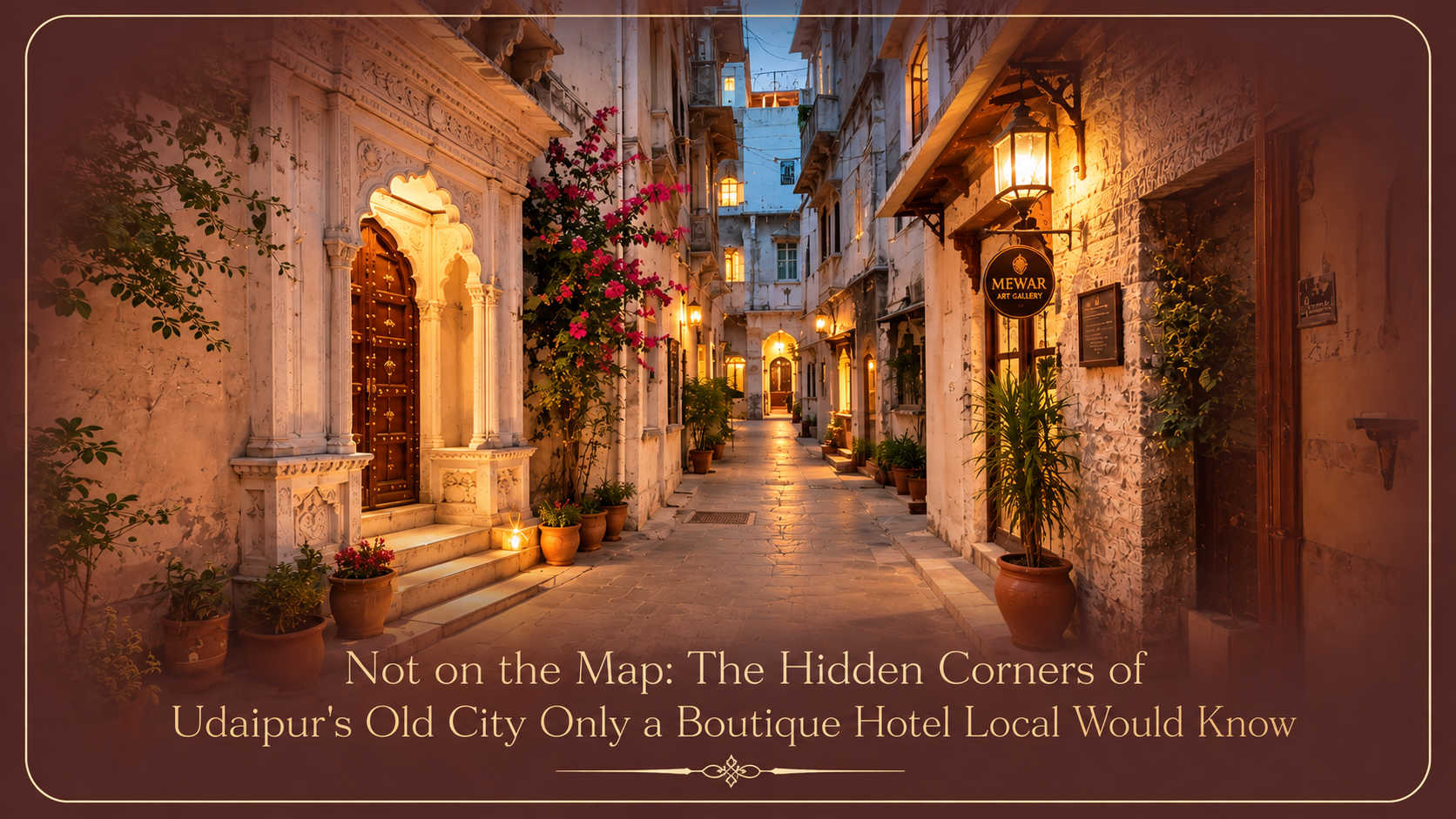
The famous Udaipur is easy to recognize. There is the grand City Palace rising above Lake Pichola. There is Jagdish Temple, the Clock Tower, busy markets and the colourful movement of the Old City. But walk a little farther. Turn into a narrower lane. Look above the shopfront instead of at the merchandise. Slow down near an old doorway. Suddenly, another Udaipur begins to appear.
This is the city of carved balconies, faded walls, tiny shrines, family-run shops, craftsmen working quietly behind counters and courtyards glimpsed through traditional entrances. These aren't necessarily places with signs saying "hidden gem." In fact, most of them are ordinary parts of the Old City. That is precisely what makes them interesting. The best hidden places in Udaipur Old City are often the spaces travelers walk past without realizing what they are seeing. For a visitor staying in a heritage property, discovering these details can become one of the most rewarding parts of the journey.
Why the Old City Is Best Explored on Foot
Udaipur's historic centre rewards slow exploration. A vehicle can take you from one attraction to another, but walking allows you to notice the details between them. On foot, you can:
- Stop at an old doorway.
- Look closely at traditional architecture.
- Discover small shops.
- Hear temple bells from nearby shrines.
- Watch artisans working.
- Stop for chai.
- Photograph changing light across old walls.
- Follow a lane simply because it looks interesting.
The Old City isn't a place to complete quickly. It is a place to wander. And the less rigid your route, the more likely you are to discover the quieter side of Udaipur heritage.
15 Hidden Corners and Experiences
1. The Lanes Just Beyond the Main Tourist Routes
The easiest way to discover hidden places in Udaipur is to move slightly away from the busiest tourist streets. You don't need to travel far. Look for:
- Narrow residential lanes
- Older façades
- Traditional wooden doors
- Small shrines
- Quiet courtyards
- Balconies overlooking the street
- Local shops serving neighbourhood residents
The atmosphere changes quickly. The tourist traffic becomes lighter. The streets feel more residential. Shopkeepers arrange their displays, families move through the lanes and everyday life continues around the historic architecture.
Why Explore These Lanes?
They show a side of Udaipur that isn't designed specifically for visitors. The heritage feels lived-in rather than staged.
Best Time
Early morning is ideal for quieter streets. Late afternoon is better for warm architectural light.
2. Look Up at the Old Havelis
One of the simplest ways to discover the Old City's architecture is to look above street level. Many travelers walk through the lanes looking at shops and forget to look upward. Notice:
- Carved balconies
- Jharokha-style windows
- Decorative brackets
- Old wooden shutters
- Faded exterior colours
- Traditional façades
- Weathered architectural details
Some buildings are beautifully maintained. Others show years of weathering and repair. Both tell a story. The charm lies in seeing how historic architecture continues to exist alongside modern life.
Photography Tip
Try photographing:
Old balcony + sky + narrow street
rather than photographing the entire building straight on. This creates more depth and gives your photographs a sense of place.
3. Courtyards Hidden Behind Old Doorways
Traditional havelis often revolve around courtyards, creating private spaces protected from the busy street. You may occasionally glimpse these spaces through an open entrance or from a public lane. But there is an important difference between seeing and entering. Remember:
- Don't enter private properties.
- Don't photograph private interiors without permission.
- Don't stand in doorways blocking residents.
- Treat every residential entrance as someone's home.
Instead, notice the architectural transition. Look for:
- Heavy wooden doors
- Decorative entrances
- Shaded passages
- Courtyard glimpses
- Carved details
- Light falling through openings
Sometimes a glimpse is more evocative than a complete view.
4. Small Temples Within Everyday Neighbourhoods
Jagdish Temple is one of Udaipur's most recognizable landmarks, but smaller religious spaces are woven throughout the historic neighbourhoods. Some are surprisingly easy to miss. You may notice:
- Small temple entrances
- Bells hanging near doorways
- Flower offerings
- Painted religious symbols
- Residents stopping briefly for prayer
These spaces are part of everyday community life. They are not simply sightseeing stops.
Temple Etiquette
- Observe from public areas.
- Dress respectfully.
- Keep your voice low.
- Ask before photographing people.
- Never interrupt prayers or rituals for a photograph.
For travelers interested in Mewari culture, these quiet spaces can reveal how tradition remains part of ordinary life.
5. Hathi Pol: Look Beyond the Shopping
Hathi Pol is well known among visitors looking for traditional Rajasthani crafts. But instead of treating it only as a shopping destination, spend time observing the market itself. Look for:
- Miniature paintings
- Textiles
- Traditional jewellery
- Handcrafted décor
- Colourful fabrics
- Small independent shops
- Artists and craftspeople
Make Shopping More Meaningful
Don't simply ask: "How much is this?"
Also ask:
- How is it made?
- What material is used?
- Is the design traditional?
- How long does it take to create?
A simple purchase can become a cultural conversation. And if you photograph a shopkeeper or artisan, ask first.
6. Bada Bazaar and Everyday Udaipur
The traditional market areas around the Old City reveal another side of Udaipur. Here, tourism and everyday life overlap. You may see:
- Traditional clothing
- Jewellery
- Household items
- Fabrics
- Food shops
- Local families shopping
- Vendors preparing their displays
The important thing is not to rush. Stand aside for a moment and watch the market move around you.
Local Walking Tip
The lanes can become busy. So:
- Keep to one side.
- Avoid stopping in narrow passages.
- Be aware of scooters.
- Keep valuables secure.
- Give local shoppers space.
This small amount of consideration makes exploring the Old City much more pleasant.
7. Follow the Artisan, Not Just the Souvenir
Udaipur's craft traditions are an important part of its identity. Miniature painting, textiles, jewellery and decorative crafts can all be encountered around the city's markets and artisan areas. But the finished product is only half the story. Watch for:
- Brushes moving across miniature paintings
- Fabric being arranged
- Jewellery being examined
- Traditional patterns being explained
- Craftsmen working inside small storefronts
If a workshop welcomes visitors, take your time.
Good Artisan Etiquette
- Ask before photographing.
- Don't touch unfinished pieces.
- Listen when an artisan explains the process.
- Don't interrupt someone who is working.
- Purchase directly when you genuinely want the product.
For travelers seeking offbeat places in Udaipur, these interactions can be more meaningful than simply visiting another attraction.
8. Find a Chai Stop Without a Lake View
Udaipur has no shortage of restaurants and cafés with beautiful views. But sometimes the most memorable cup of chai comes without one. Look for small local tea counters and simple eateries where residents stop during their daily routines. Look For:
- Busy chai counters
- Freshly prepared snacks
- Traditional breakfast dishes
- Local sweets
- Small family-run eateries
The setting might be basic. There may be plastic chairs instead of designer interiors. But you get something else: A glimpse of everyday Udaipur.
Try This
Ask: "What is fresh today?" It is often a better question than asking for the most popular tourist dish.
9. Discover Photography Corners Instead of Famous Viewpoints
The best photography spots in Udaipur aren't always viewpoints with crowds gathered around them. Sometimes the best image is waiting in an ordinary lane. Try photographing:
- A weathered doorway
- A traditional balcony
- A quiet lane at sunrise
- Market activity
- Temple architecture
- Textures on old walls
- Shadows across heritage façades
- Rooftop silhouettes
- A glimpse of the Aravalli Hills
Best Photography Times
Early morning
- Softer light
- Fewer people
- Cooler temperatures
- Quieter streets
Late afternoon
- Golden architectural tones
- More active street life
- Dramatic shadows
- Beautiful transition towards sunset
The trick is to photograph what most people overlook.
10. Rooftops Reveal Another Udaipur
At street level, the Old City can feel dense and intimate. From above, it becomes completely different. Historic rooftops overlap with newer buildings. Temple structures appear between houses. The Aravalli Hills can emerge in the distance, while evening lights begin to appear across the city. From a rooftop, you may notice:
- Old-city architecture
- Temple silhouettes
- Heritage rooftops
- Distant hills
- Lake glimpses
- Evening city lights
Of course, private rooftops should never be entered without permission. This is where staying at a property with its own rooftop becomes useful. At Kaladwas Lal Haveli, the rooftop gives guests an elevated perspective over the historic surroundings while keeping them close to the character of the Old City. It can be a particularly peaceful place to end an afternoon of walking.
11. Notice the Details Between the Landmarks
The real character of the Old City often appears between the places listed in guidebooks. Notice:
- A shopkeeper sweeping the entrance
- Flowers being arranged outside a shrine
- A family preparing food
- A bicycle passing beneath an old balcony
- A craftsman concentrating on his work
- A child returning from school
- A traditional door catching the afternoon sun
- Temple bells echoing through a lane
These aren't attractions. They are moments. And they help explain why Udaipur feels different from a city experienced entirely through monuments. Heritage here is not only something preserved. It is something lived around.
12. Explore the City Palace Area Beyond the Palace
The City Palace is one of Udaipur's essential landmarks, but don't let the monument become the entire experience. Use it as an orientation point. Once you've explored the main attraction, pay attention to the streets around it. Look for:
- Traditional buildings
- Small shops
- Local cafés
- Heritage façades
- Side lanes
- Street vendors
- Architectural details
The idea isn't to avoid the famous places. It's to look beyond them. The same principle applies around Jagdish Temple and the Lake Pichola side of the Old City. Major landmarks can be your starting points—not your final destinations.
13. A Different Way to Experience Lake Pichola
Lake Pichola is one of Udaipur's defining landscapes. But experiencing it doesn't always mean immediately joining the busiest tourist activity. Consider:
- Walking along quieter public stretches
- Watching boats from the shore
- Visiting a ghat respectfully
- Photographing reflections
- Observing evening activity
- Looking at the lake from an elevated rooftop
The lake changes throughout the day. Morning is calmer. Afternoon is brighter. Evening brings reflections and silhouettes.
Photography Tip
The last 20–30 minutes before sunset can produce beautifully layered images of: water + architecture + sky + silhouettes
14. Gangaur Ghat After the Crowds Thin
Gangaur Ghat is a recognizable part of Udaipur's waterfront landscape, but its atmosphere can change considerably depending on the time of day. Instead of visiting only during peak sightseeing hours, consider an early or later visit when the surroundings feel quieter. Look For:
- Reflections across the water
- Historic façades
- Temple and ghat details
- Local activity
- Evening silhouettes
- Changing light
As with other religious and residential areas, visitors should remain respectful and avoid treating active spaces as photography sets.
15. The Old City After Sunset
Udaipur's Old City doesn't suddenly become empty after dark. Instead, its character changes. You'll notice:
- Warm shop lights
- Rooftop dining
- Evening conversations
- Temple bells
- Families returning home
- Small food stalls
- Illuminated heritage façades
This is a beautiful time for a relaxed walk through active, well-used streets. However, don't turn a search for "secret places" into an excuse to enter isolated or poorly lit lanes.
After-Dark Tip
Stay on familiar public routes, especially if traveling alone, and ask your hotel team for current local guidance before taking a longer evening walk.
Best Time to Explore Hidden Corners of Udaipur
There isn't one perfect hour for every experience.
7:00–9:00 AM
Best for:
- Quiet lanes
- Photography
- Cooler temperatures
- Morning local life
10:00 AM–1:00 PM
Best for:
- Markets
- Shopping
- Artisan visits
Avoid extended outdoor walks during particularly hot weather.
4:00–6:30 PM
Best for:
- Heritage architecture
- Street photography
- Shopping
- Golden-hour walks
After 7:00 PM
Best for:
- Rooftop views
- Dinner
- Evening atmosphere
For a detailed month-by-month breakdown of Udaipur's weather and travel conditions, readers can also explore the existing Best Time to Visit Udaipur guide rather than repeating the seasonal information here.
Walking, Photography and Local Etiquette
The privilege of discovering quieter places comes with responsibility.
While Walking
- Keep narrow lanes clear.
- Watch for scooters and motorcycles.
- Avoid entering private properties.
- Respect residential spaces.
While Photographing
- Ask before photographing people.
- Don't photograph private interiors without permission.
- Avoid interrupting religious ceremonies.
- Don't climb onto buildings for a better angle.
At Markets
- Bargain politely where appropriate.
- Don't handle fragile crafts without permission.
- Respect artisans' time.
- Support local businesses when possible.
At Temples and Ghats
- Dress appropriately.
- Follow local instructions.
- Keep noise low.
- Respect worshippers and ceremonies.
A thoughtful traveler sees more because people are more comfortable around them.
A Simple Old City Walking Route
If you want a flexible half-day route, start close to the heritage centre and allow yourself plenty of time for detours.
Suggested Route
Kaladwas Lal Haveli
↓
Ghanta Ghar / Clock Tower area
↓
Bada Bazaar
↓
Traditional Old City lanes
↓
Jagdish Temple surroundings
↓
City Palace area
↓
Gangaur Ghat
↓
Rooftop for sunset
Don't Treat It Like a Checklist
Allow time for:
- Chai
- Photography
- Shopping
- Artisan conversations
- Architecture
- Unexpected turns
The purpose isn't to complete the route. The purpose is to experience the neighbourhood.
Why Staying at a Heritage Boutique Hotel Helps
One of the biggest advantages of staying close to the Old City is flexibility. You don't have to explore everything in one exhausting walk. Instead, you can:
Morning:
Take a quiet heritage walk.
Midday:
Return to the hotel and rest.
Afternoon:
Explore markets and artisan shops.
Evening:
Walk towards a ghat or viewpoint.
Night:
Return to your heritage stay for dinner.
This slower rhythm allows you to see the Old City at different times of day. For travelers searching for a boutique hotel in Udaipur, a heritage property can therefore be more than accommodation. It can become a base for understanding the neighbourhood. Kaladwas Lal Haveli, with its heritage setting in Udaipur's historic area, naturally fits this style of travel. Its character allows the accommodation itself to become part of the Old City experience rather than simply a place to return to after sightseeing.
8 Hidden-Corner Experiences to Add to Your Udaipur Itinerary
If you don't want to follow a formal walking tour, add a few of these experiences to your day:
- Morning Heritage Walk — Explore quiet lanes before the main tourist activity begins.
- Architecture Hunt — Look specifically for balconies, doors, windows and decorative details.
- Local Chai — Stop at a simple tea counter rather than choosing only cafés with tourist views.
- Artisan Conversation — Visit a workshop that welcomes visitors and learn how a traditional craft is made.
- Market Exploration — Spend time observing Hathi Pol or Bada Bazaar beyond souvenir shopping.
- Temple Observation — Notice smaller religious spaces while respecting worshippers.
- Golden-Hour Photography — Photograph old walls, rooftops and lanes during the final hour of daylight.
- Rooftop Sunset — End the walk above the Old City, watching the lights appear across the rooftops.
Questions About Hidden Corners and Exploration
Find answers to common questions about discovering the quieter side of Udaipur's Old City.


The Best Parts of Udaipur May Be the Ones You Almost Miss
The famous Udaipur is spectacular. But the quieter Udaipur is intimate. It lives in the details: A carved wooden doorway you nearly walked past. A faded balcony catching the afternoon sun. A tiny shrine tucked into a neighbourhood lane. The sound of bells behind a busy market. An artisan patiently working on a traditional craft. A simple cup of chai between two sightseeing stops. A rooftop where the city slowly turns gold. A narrow street opening unexpectedly towards the hills.
These moments rarely appear as major attractions on a tourist map. And perhaps they shouldn't. Their charm comes partly from discovering them naturally. For travelers staying at Kaladwas Lal Haveli, the heritage setting offers a convenient base for exploring these layers of Udaipur at an unhurried pace. You can step into the Old City's lanes, return to the haveli when the afternoon heat becomes too much, and head out again as the evening light arrives. That is the beauty of exploring Udaipur like a local rather than simply visiting it like a tourist. Because sometimes the best parts of Udaipur are not the places you were looking for—they are the corners you almost walked past.

