

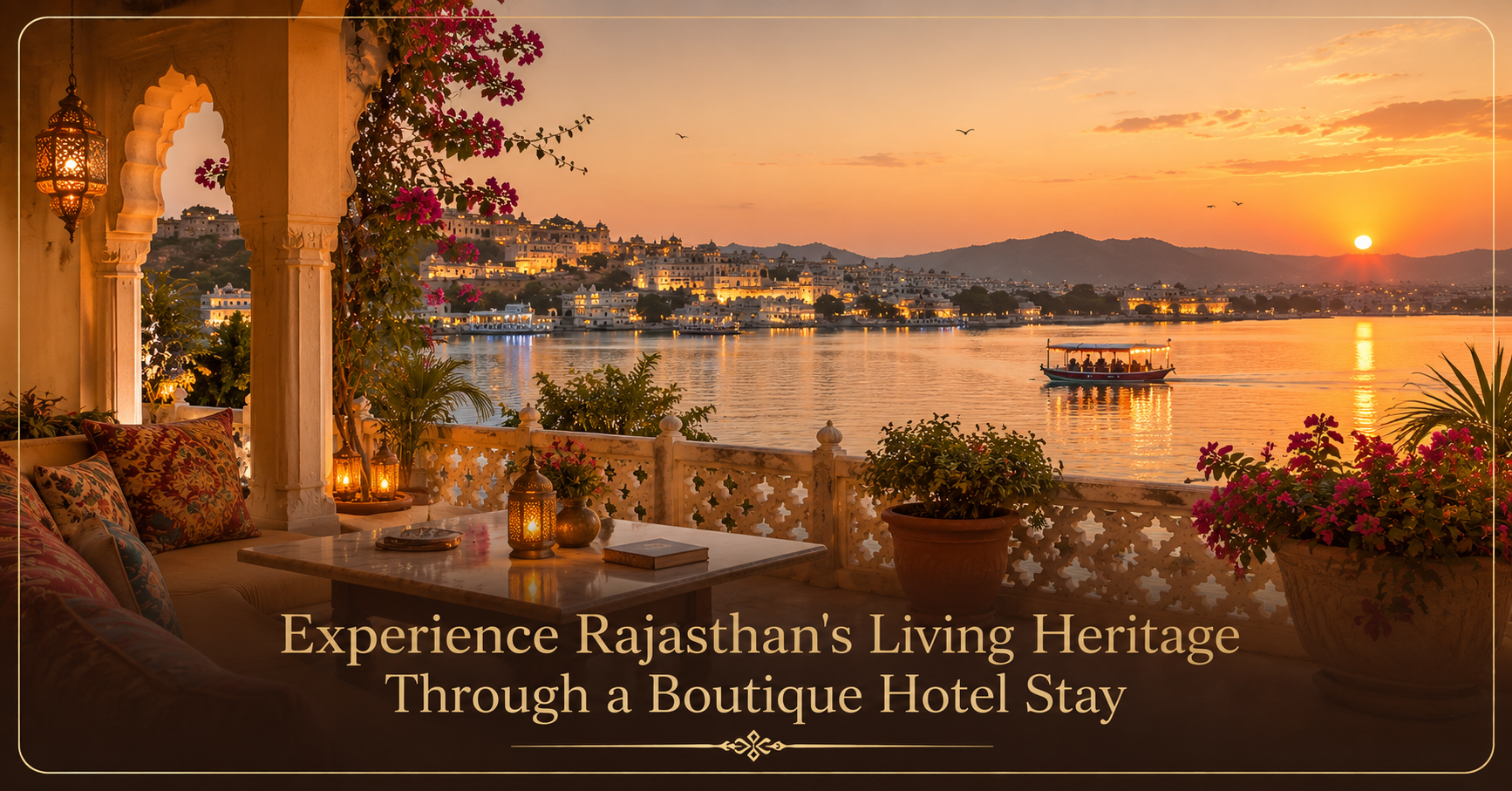
Experience Rajasthan's Living Heritage Through a Boutique Hotel Stay
Udaipur is a city where Rajasthan's heritage is not confined to museums and monuments. It appears in old-city lanes, carved haveli façades, Mewari food, folk performances, traditional markets and the everyday rhythm around its lakes. For travellers who want to experience this culture more closely, where you stay can make a difference. A heritage boutique hotel can provide a quieter connection to the city than a conventional hotel, particularly when its architecture, food and hospitality reflect the place around it.
For a first-time traveller visiting Udaipur, Kaladwas Lal Haveli offers this kind of setting: a restored 300-year-old haveli in the Old City, with traditional architecture, themed rooms, Mewari cuisine, cultural experiences and a rooftop restaurant.
What Does "Living Heritage" Mean in Rajasthan?
Living heritage is different from simply looking at an old building.
It is the combination of architecture, food, music, craftsmanship, traditions and everyday practices that continue to have a place in modern life.
In Udaipur, that can mean noticing traditional architectural details while walking through the Old City, eating a regional Mewari dish, listening to folk music in the evening or browsing handmade crafts in a local market.
This is why a heritage stay can complement sightseeing. Instead of spending the entire day visiting historic places and returning to an anonymous modern hotel, your accommodation can continue the cultural experience after the day's sightseeing is over.

Stay Inside a Traditional Haveli
A good starting point is the building itself.
Havelis are more than old residences. Their courtyards, carved details, traditional layouts and decorative elements reflect how homes were designed and lived in Rajasthan.
Kaladwas Lal Haveli is a 300-year-old restored heritage haveli in Udaipur's Old City. Its rooms are individually themed around aspects of Mewar's aristocratic heritage and traditional architecture, incorporating antique décor, artistic craftsmanship and historical design influences.
For a traveller interested in heritage, this changes the experience of accommodation. The building becomes part of the trip rather than simply somewhere to sleep.
Why this matters
If architecture interests you, look beyond photographs of a hotel room when choosing a heritage stay. Consider:
- the age and character of the property
- whether original architectural elements have been retained
- how the rooms relate to the building's history
- whether the property reflects the surrounding destination
- whether cultural experiences extend beyond the décor
The best heritage stays give you something to notice even when you are not sightseeing.

Explore Udaipur's Old City on Foot
You don't necessarily need a formal cultural tour to experience Udaipur.
Some of the most revealing moments happen while walking through the Old City.
Around the historic centre, you can encounter temples, small shops, traditional architecture, street food, artisans and everyday local activity within a relatively compact area.
Kaladwas Lal Haveli is located in Udaipur's Old City, near attractions including Lake Pichola, Gangaur Ghat and Jagdish Mandir, making the historic part of the city an important part of the stay.
A practical approach
Don't try to cover every landmark in one walk.
Instead, choose a small area and slow down.
A morning walk can work particularly well because you get to see the city beginning its day. In the evening, the same streets have a completely different atmosphere as shops remain active and visitors head towards the lake and surrounding restaurants.
This is one of those experiences where walking without constantly checking your itinerary can be more rewarding than rushing between attractions.

Spend Time at Bagore Ki Haveli
For travellers interested in Rajasthan's performing arts, Bagore Ki Haveli is an important stop.
Located at Gangaur Ghat beside Lake Pichola, the 18th-century haveli was built by Amar Chand Badwa, a Prime Minister of Mewar. Rajasthan Tourism notes that the property contains more than 100 rooms displaying costumes and other collections, with interiors featuring traditional haveli-style glass and mirror work.
The cultural experience continues after the museum itself. The Dharohar dance show presents traditional music and performances in the haveli's Neem Chowk, making an evening visit particularly worthwhile.
Why include it in your itinerary?
Because it lets you experience Rajasthan through performance, rather than only through architecture.
If you're visiting Udaipur for three days, this is an easy experience to pair with an Old City and Lake Pichola day.
Watch Traditional Folk Performances
Rajasthan's culture is closely associated with music, dance, storytelling and puppetry.
Udaipur offers several opportunities to encounter these traditions.
The Bharatiya Lok Kala Mandal, for example, is dedicated to the folk art, culture, songs and festivals of Rajasthan, Gujarat and Madhya Pradesh. Rajasthan Tourism also highlights traditional Kathputli puppetry performances at the institution.
This kind of experience is particularly useful for travellers who want more than photographs of palaces.
You hear the instruments. You see the costumes and movement. And you begin to understand how folk traditions function as living cultural expressions rather than simply museum displays.

Discover Rajasthan Through Mewari Cuisine
Food is one of the easiest ways to understand a region.
In Udaipur, that means making room for Mewari and Rajasthani flavours, rather than relying entirely on familiar restaurant dishes.
Traditional food can reveal something about local ingredients, cooking methods and the influence of Rajasthan's landscape and history.
At Kaladwas Lal Haveli, Mewari cuisine is part of the property's heritage positioning, with the hotel describing its food as based on traditional recipes and local ingredients. The property also highlights culinary sessions as part of its cultural offering.
Don't make food another checklist
You don't need to try twenty dishes.
Instead, ask what is genuinely regional and try one or two dishes you haven't had before.
If you're staying at a heritage boutique hotel, a meal within the property can also become part of the cultural experience—particularly when the setting, food and hospitality all reflect Rajasthan.
Visit Shilpgram for Rajasthan's Craft Traditions
If you're interested in handicrafts and rural traditions, make time for Shilpgram, the Rural Arts and Crafts Complex near Udaipur.
Rajasthan Tourism describes Shilpgram as a living museum designed to represent the lifestyles of folk and tribal communities from western India. It is surrounded by the Aravallis and focuses on rural arts and crafts.
This gives the cultural experience a different perspective.
Historic palaces tell you about royal Rajasthan. Shilpgram helps you understand the artistic traditions and everyday craftsmanship that form another important part of the region's identity.
For travellers who enjoy photography, textiles, pottery, jewellery or handmade décor, this can be one of the more rewarding additions to an Udaipur itinerary.

Explore Local Markets Instead of Only Shopping Malls
A cultural trip to Udaipur should leave some room for wandering through local markets.
The areas around Ghanta Ghar, Jagdish Chowk and Bada Bazaar offer opportunities to see handicrafts, jewellery, textiles and other locally influenced products. Rajasthan Tourism specifically highlights Ghanta Ghar for silver jewellery, handicrafts and rustic wooden items, while Bada Bazaar offers a broader shopping experience.
The better approach is to browse first.
Look at how items are made, ask questions when appropriate and compare pieces before buying. That makes shopping feel less like ticking off souvenirs and more like engaging with the city's craft culture.

Experience Lake Pichola Beyond the Photograph
Lake Pichola is one of Udaipur's defining landscapes, but simply taking a photograph from the waterfront doesn't tell you much about the lake.
A boat ride gives you a different perspective.
Rajasthan Tourism notes that the lake contains the islands of Jagniwas and Jagmandir, while the City Palace stands along its eastern bank. It also specifically recommends a boat ride around sunset for views of the lake and City Palace.
For first-time visitors, timing matters.
A late-afternoon or sunset experience allows you to see the lake as the light changes, rather than treating it as another daytime sightseeing stop.

Visit a Temple and Observe the Ritual Side of Udaipur
Culture isn't only architecture, food and entertainment.
For many visitors, Rajasthan's religious traditions are an equally important part of understanding the region.
Jagdish Temple is particularly significant in the Old City and is commonly included alongside Udaipur's historic attractions. Rajasthan Tourism's Udaipur recommendations place the temple among the city's important cultural and heritage sights.
When visiting a religious site, the best approach is simple: dress appropriately, observe local customs and avoid treating active places of worship purely as photographic locations.
That small change in attitude can make the visit feel more respectful and meaningful.
Let Your Hotel Become Part of the Cultural Experience
This is where choosing the right accommodation becomes important.
A heritage boutique hotel can connect the different parts of your trip: architecture in the morning, local food at lunch, sightseeing during the afternoon and traditional music or rooftop dining in the evening.
At Kaladwas Lal Haveli, the cultural experience extends beyond the historic structure itself. The property highlights traditional Rajasthani architecture, Mewari cuisine, cultural experiences, folk music evenings, heritage walks and rooftop dining with live performances.
That makes the hotel relevant to travellers who don't want their cultural experience to end when the day's sightseeing is finished.
What Makes a Heritage Stay Different?
Neither approach is automatically better.
The right choice depends on what you want from your trip.
But if your priority is experiencing Rajasthan rather than simply visiting Rajasthan, a heritage stay deserves consideration.
Role of the Accommodation
Conventional hotel stay: Accommodation is mainly a base. Heritage boutique stay: Accommodation becomes part of the experience.
Architecture
Conventional hotel stay: Modern design may feel detached from the destination. Heritage boutique stay: Architecture can reflect local history.
Dining
Conventional hotel stay: Dining is often separate from cultural discovery. Heritage boutique stay: Food can become part of the regional experience.
Cultural Activities
Conventional hotel stay: Cultural activities usually happen outside. Heritage boutique stay: Some experiences can continue within the property.
Character
Conventional hotel stay: The hotel may feel interchangeable. Heritage boutique stay: The building can have its own character.
How to Experience Udaipur's Culture in Three Days
You don't need a long holiday to experience the city's cultural side.
Start with a relaxed walk through the Old City.
Visit:
- Jagdish Temple
- City Palace
- Gangaur Ghat
- Bagore Ki Haveli
In the evening, consider the Dharohar cultural performance at Bagore Ki Haveli.
Return to your heritage stay and keep the evening slow rather than adding another packed sightseeing stop.
Spend part of the day around Lake Pichola.
A sunset boat ride can be the centrepiece of the evening, followed by dinner overlooking the historic surroundings.
Leave some unscheduled time for local cafés, markets or simply walking through the Old City.
Visit Shilpgram or Bharatiya Lok Kala Mandal depending on your interests.
Spend time exploring local markets and leave room for a regional meal.
If you're staying at a heritage property such as Kaladwas Lal Haveli, consider making the final evening part of the stay itself—whether through its rooftop restaurant, cultural programming or simply spending time within the historic setting.
Why a Boutique Hotel Can Deepen Your Rajasthan Experience
The biggest advantage isn't that a boutique hotel automatically makes a trip more luxurious.
It's that a thoughtfully restored property can provide context.
You see traditional architectural details when you wake up. You encounter regional food during your stay. You may hear folk music in the evening. And when the hotel sits within the historic city, stepping outside puts you directly into the urban landscape you're there to explore.
That is particularly relevant in Udaipur, where the relationship between lake, palace, haveli, temple and Old City street is central to the character of the destination.
At Kaladwas Lal Haveli, the seven themed rooms are designed around aspects of Mewar's aristocratic heritage and traditional architecture, while the property combines these elements with modern hospitality amenities.
For a traveller who values cultural context, that's more meaningful than choosing accommodation based only on room size or a generic luxury label.
What Should You Look for in a Heritage Boutique Hotel?
Before booking, ask a few practical questions:
Does the property have a genuine historical character?
Look for clear information about the building and its restoration rather than relying only on words such as "heritage" or "royal."
Does the experience go beyond décor?
Food, music, local experiences and neighbourhood context can make a heritage stay much more meaningful.
Is the location practical?
A beautiful property isn't as useful if reaching the places you want to visit becomes inconvenient.
Can you experience the destination without constantly leaving the hotel?
A rooftop restaurant, cultural programme or regional dining experience can make the stay itself part of your itinerary.
Does the property balance heritage with modern comfort?
Historic character is valuable, but basic comfort still matters after a full day exploring Udaipur.


Why Kaladwas Lal Haveli Fits the Heritage-Stay Experience
For travellers specifically searching for a heritage boutique hotel in Udaipur, Kaladwas Lal Haveli offers a combination of historic setting and contemporary hospitality.
The property describes itself as a restored 300-year-old heritage haveli in Udaipur's Old City. Its rooms draw on Mewar's aristocratic heritage and traditional architecture, while its offerings include Mewari cuisine, cultural experiences, live performances, a rooftop restaurant and modern amenities such as Wi-Fi and laundry service.
The appeal is straightforward: you don't have to separate your accommodation from your interest in Rajasthan's culture.
The building, the food, the setting and selected cultural experiences can all become part of the same journey.
Frequently Asked Questions
Final Thought
Rajasthan's heritage is most memorable when it becomes part of ordinary moments: eating a regional meal, walking through an old neighbourhood, listening to folk music after sunset or waking up inside a building whose architecture carries traces of another era.
That is the real value of a heritage boutique hotel stay in Udaipur. You are still a traveller, but the place where you stay becomes part of how you understand the destination.
For travellers who want that connection to continue beyond sightseeing, Kaladwas Lal Haveli offers a heritage-focused stay within Udaipur's Old City, combining its restored haveli character with Mewari cuisine, cultural experiences and contemporary hospitality.

